We used to log off
Online used to be a place you could leave. We designed the exit out of it because an exit reads as a leak. Here is why building it back is a design responsibility, and what that means now that AI is dissolving the last seam.
Written by
Wira Indra Kusuma
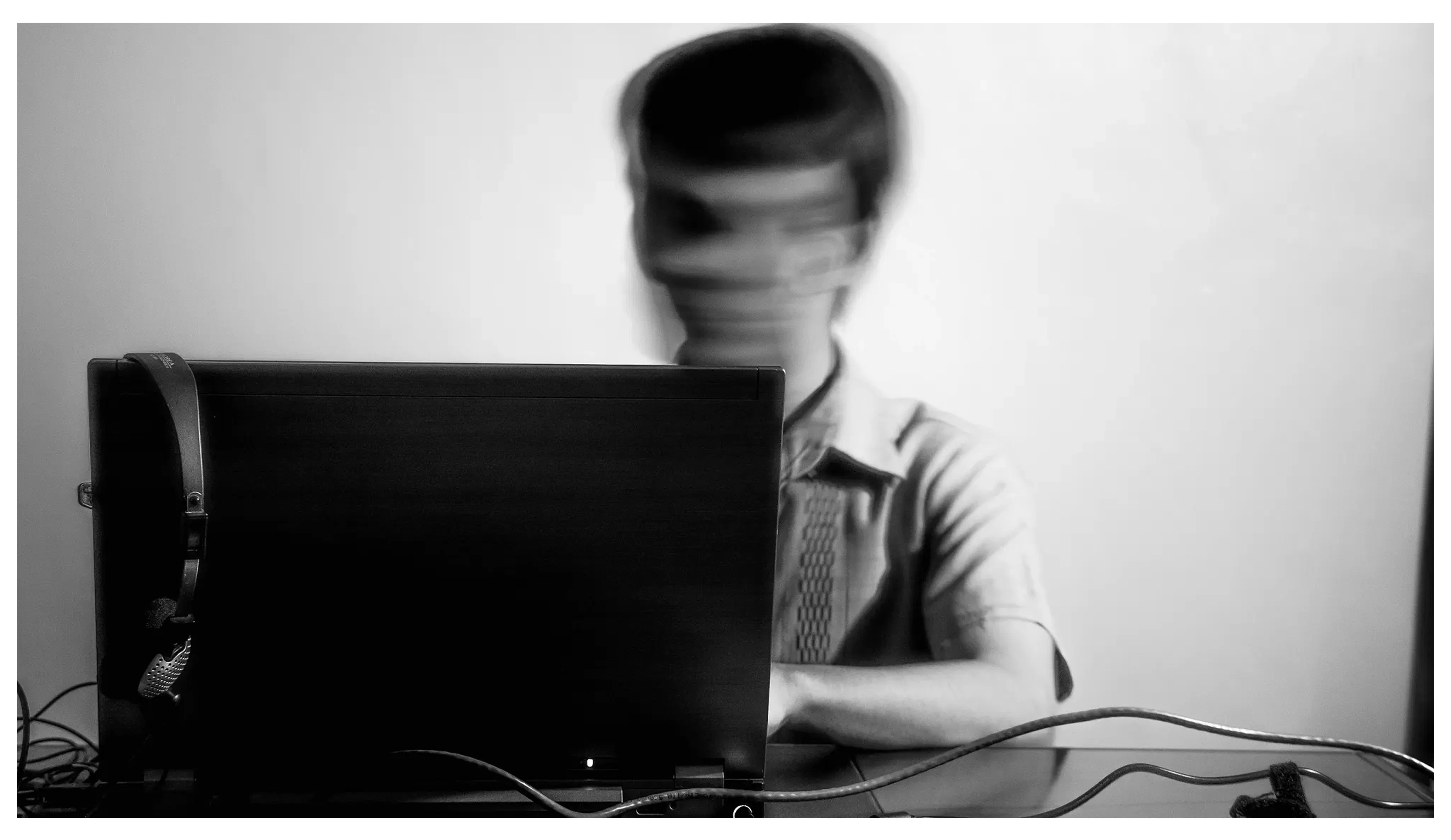
The self that never clears — Photo by Road Ahead on Unsplash
There is a sound a certain generation can still replay without effort. The dial-up modem shrieking, that wavering hum like two machines introducing themselves awkwardly, then a click, then silence. After the click, the internet left. Not minimized. Not pushed to the background. Gone, somewhere else, and you were returned to the physical room you were sitting in, with the slowing fan of the computer and the wall clock suddenly audible again.
Logging off was an action. It had a verb. You closed something, and the day resumed its other texture.
This morning I woke up, and the world was already mid-sentence. Nothing needed connecting. Threads had moved overnight, notifications were queued before my eyes focused, and a few conversations I had left when I went to sleep already had a new act without me. I did not arrive anywhere this morning, because last night I never left. There was no door I crossed in either direction.
A place that turned into a layer
Online used to be a place. You visited it. There was a small journey in: switch on, connect, wait, and the same small journey back out. A place has edges. The edge is what tells you when you are inside and when you are out.
Now, online is not a place you go to. It is a layer you live inside. It clings to the morning, the dinner table, the checkout line, the bed before sleep and after waking. There is no visit because there is no return. What died slowly, with no announcement, is a concept we once took for granted: the session. A unit of time with a beginning and an end. Something that started, ran, and finished.
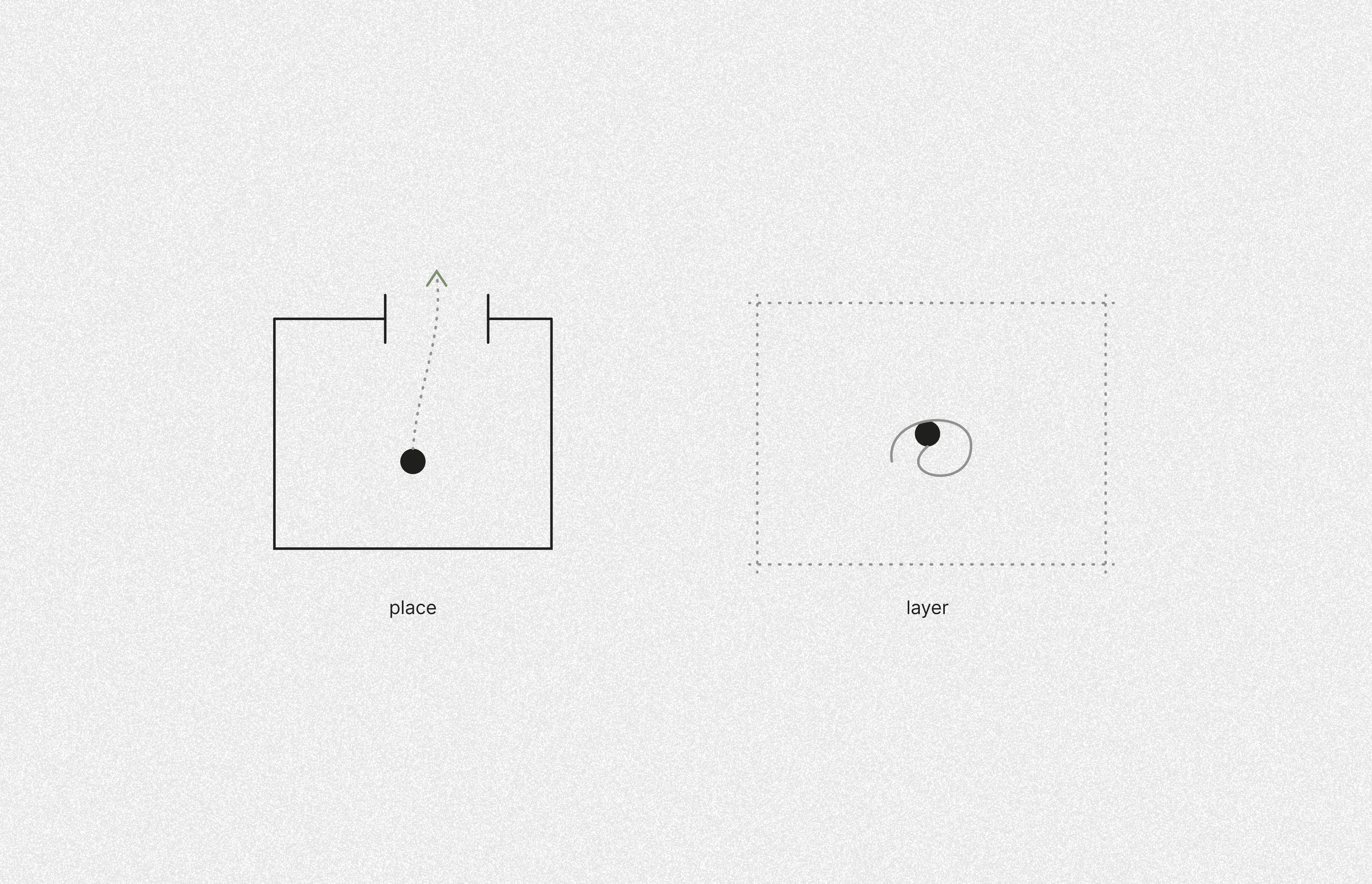
A place with a door vs a layer with no door
I want to call this a structural loss rather than a failure of willpower. We tend to blame ourselves for it, as if the missing thing were discipline. But the door has been taken off its hinges. It is hard to leave a place that has no exit.
Who took the door off
This is where I have to be honest about where I stand, because I am not a bystander missing it from a distance.
I work on the side that builds this. In digital products, friction is the enemy. Every pause, every extra step, every moment of hesitation is a place where people stop, and stopping is what we measure as leakage. Logging off is the tidiest friction there is. It is a clean goodbye. And a clean goodbye, on every dashboard I have ever stared at, reads as a session ended, retention dropped, engagement lost.
Even a page used to have an end. Content came in pages, and at the bottom sat a “Next” button. That button was really a decision point: it forced a pause, a question, do I want to keep going. Then infinite scroll arrived and the decision point was removed. Not because it was broken. Because it worked. It made people stop.
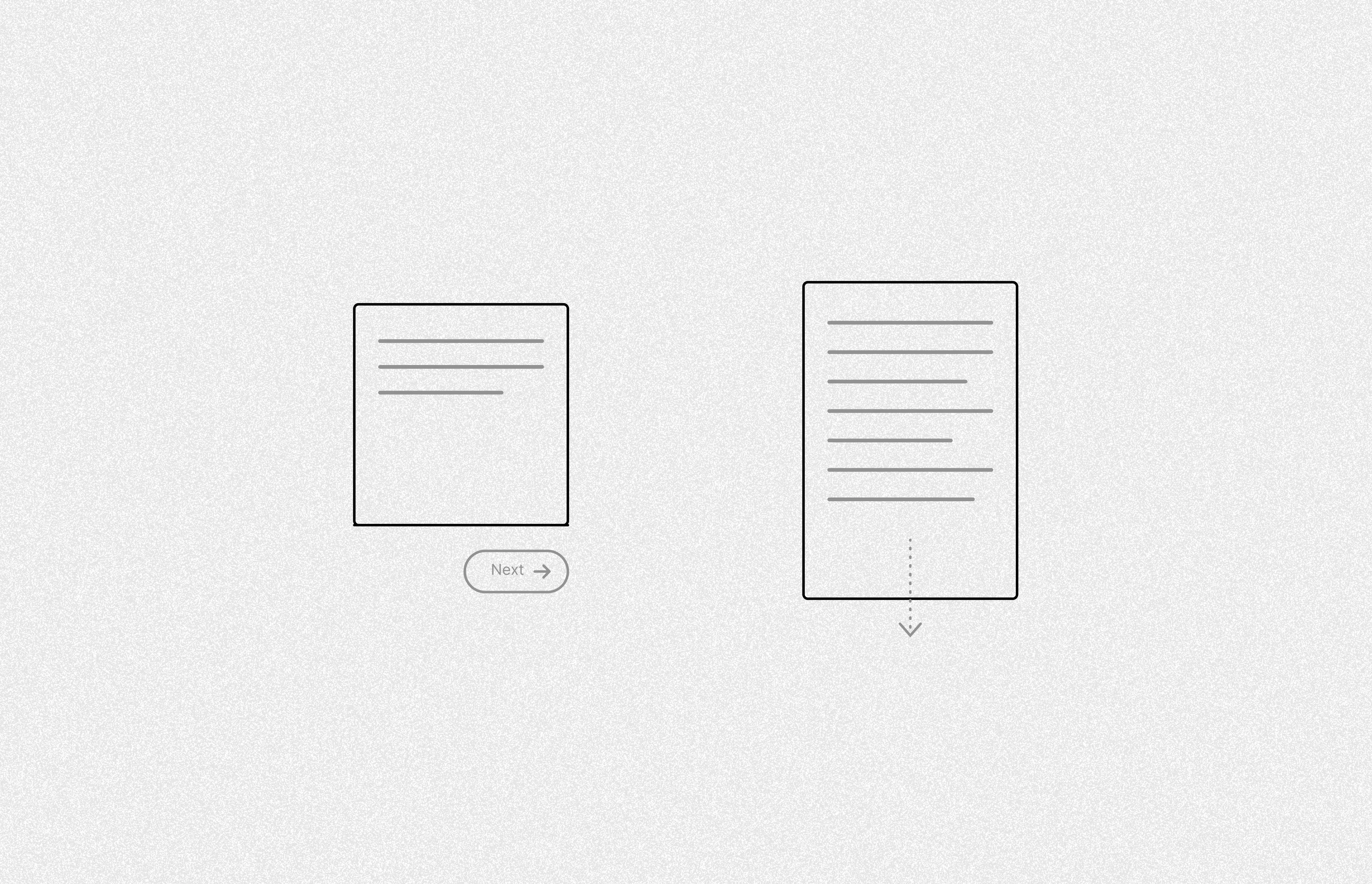
A stopping cue vs endless scroll
What never came up in any review is that the friction we were removing has another name in my own field. Anna Cox and her colleagues call it a microboundary: a small obstacle placed before an interaction that keeps us from rushing from one context into the next. Their argument is that deliberately designed friction can interrupt automatic, mindless interaction and hand back a moment to think. They draw a sharp line between this and manipulative design, the kind that serves the provider more than the person using it.
So we optimized it away. Not out of malice, but out of intentions that sounded good: make everything smoother, faster, closer, always ready. Every door we removed we called an improvement. And each one, taken alone, made sense. What was missing from the room was the question of what that door did, besides slowing things down.
A self that never gets cleared
There is a technical way to see what was lost, and it happens to be the language I use every day.
In a system, a session has a beginning and an end. You open it, state is created, you work, then you close it, and that state is cleared. Memory is released. The temporary is discarded. The system returns to a quiet baseline before being filled again tomorrow.
Logging off used to do that for us. It cleared the state. Not by erasing memory, but by releasing the temporary, closing what did not need carrying to bed. Now nothing is released. The feed remembers where you stopped. Your presence is always written as active. Notifications queue so that not one of them slips by. We have become processes that are never garbage-collected. Always running, always holding everything ever opened, never given a moment to return to baseline.
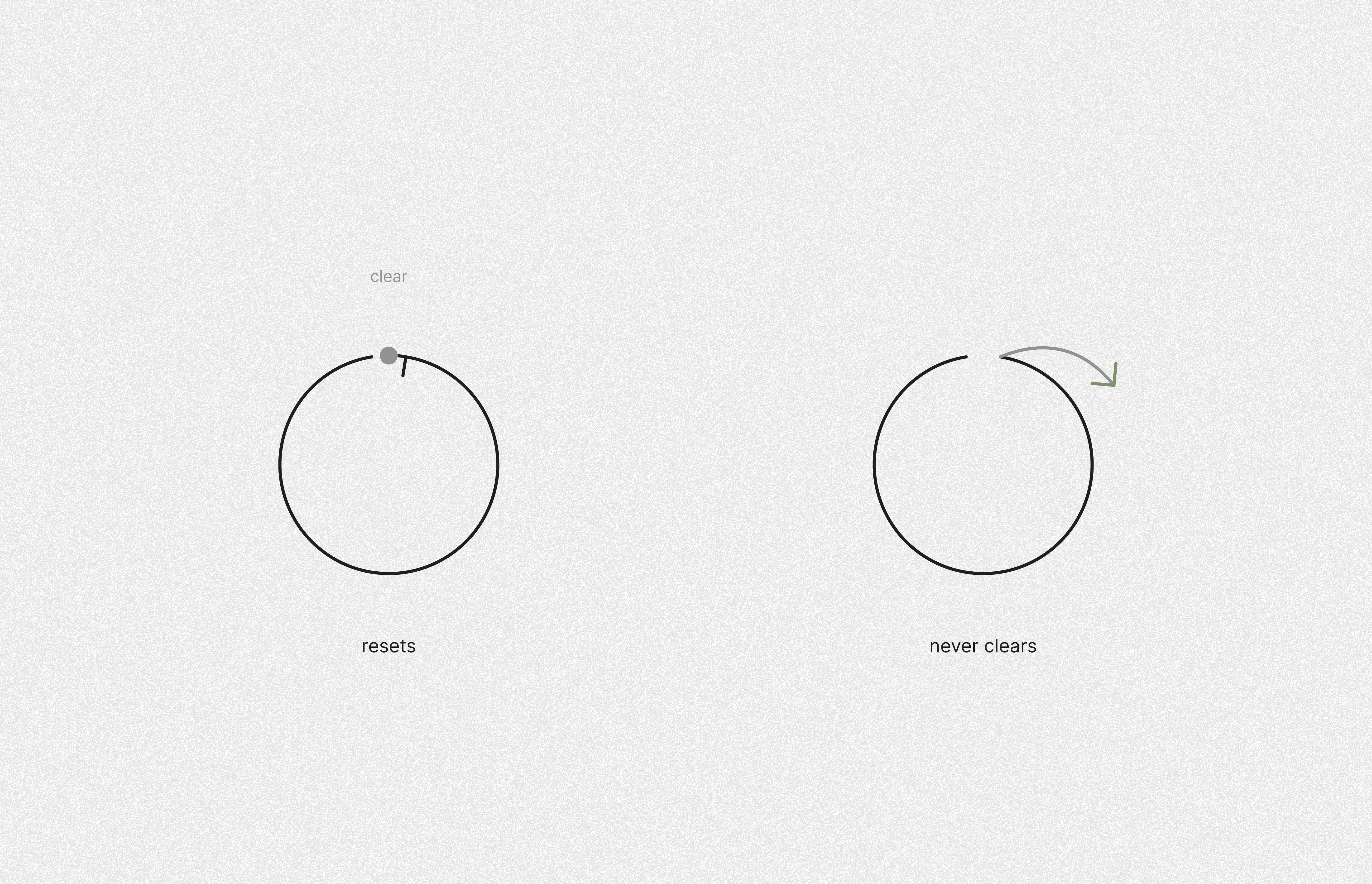
A loop that clears vs a loop that never closes
Linda Stone named this state back in 1998: continuous partial attention. Attention split without pause, scanning so as not to miss anything, driven by the wish to be a live node on the network. She separates it from multitasking, because the motive is not productivity but the fear of missing out. The cost, she says, is an artificial and permanent sense of crisis, and an eroded capacity to reflect.
The cost I find subtlest is not mainly the time spent. Time is spent, but that is a story we have all heard. The deeper one is the loss of the reset. The self that used to recover a little between sessions is now never closed long enough to recover. We carry every open tab, all day, into sleep.
The last seam
Trace the line and a pattern appears. The first seam removed was between online and offline. The second was between one session and the next, so that state never clears. And the seam being removed now is the deepest of all: the one between you and the system itself.
AI does not merely keep you online longer. It stops being a place you visit, stops even being a layer you live inside, and starts becoming a participant. It remembers what you said yesterday. It guesses your next sentence before you type it. It learns your register and answers in a rhythm that feels like your own. Slowly it stops feeling like a tool you operate and starts feeling like something thinking alongside you.
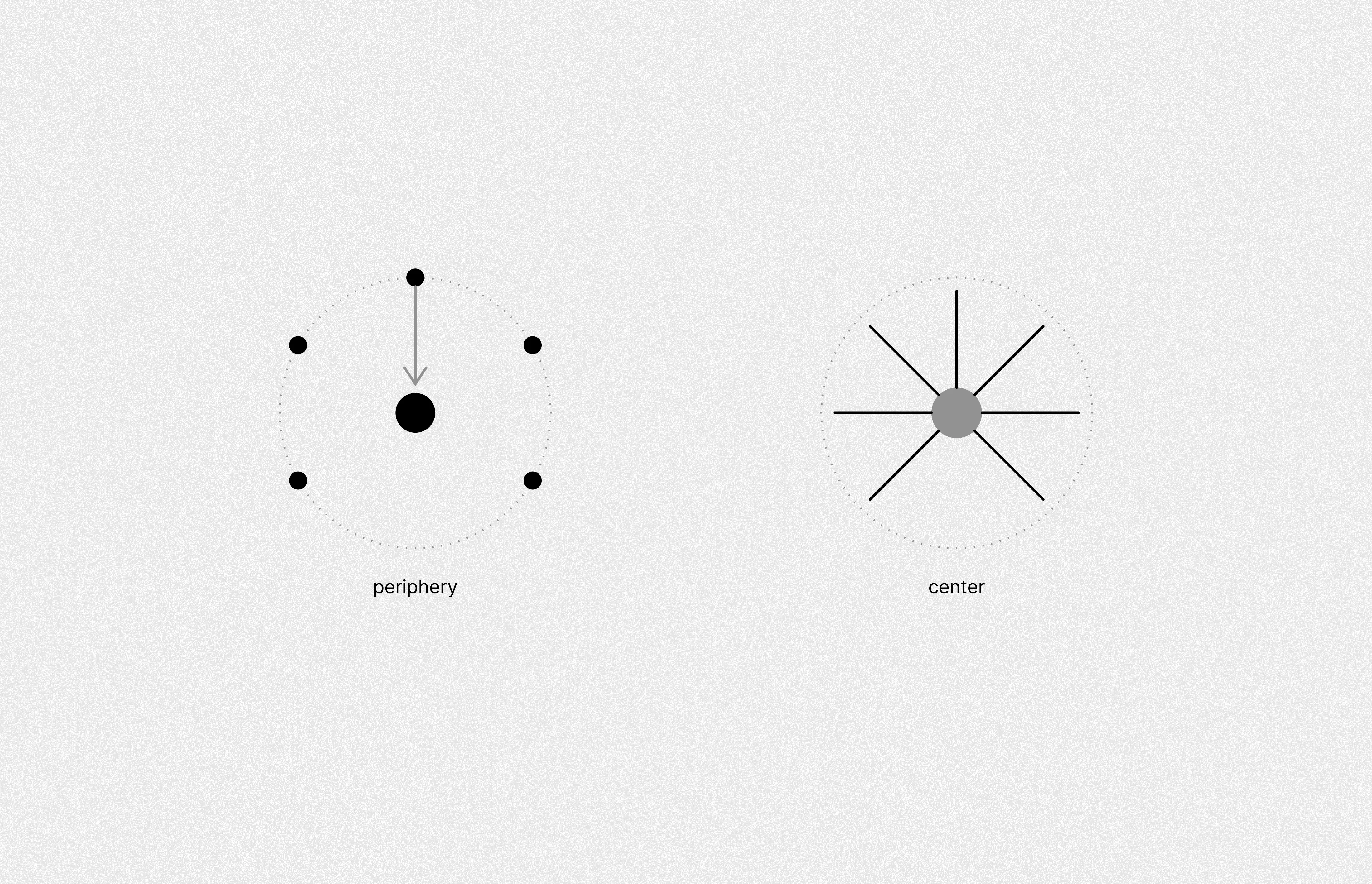
Periphery vs center
At that point the question “online or not” loses its meaning entirely. We used to have a second life on the platform, a life distinct from the one off the screen. This points somewhere further than that. Not a second life, because there is no longer a second anything. No there and here, no entering and leaving, no me and the screen. What remains is a single merged surface, with a system that remembers more about your day than you do, and speaks closely enough like you that you forget the moment you handed over your turn to think.
Frictionless was never the whole brief
The strange thing, if I am honest with myself, is that the field has known the answer for a long time. We just chose the part that was easier to sell.
Mark Weiser, the person who framed ubiquitous computing, never said the goal was seamless. He warned that making everything seamless is the same as making everything uniform, and he argued for seamful systems, ones that let each part remain itself. Chalmers and MacColl turned this into a full design position: questioning the assumption that seamlessness is a requirement, and arguing that visible seams can be useful, even appropriated by people for their own ends.
Weiser also, with John Seely Brown, named the cure long before the disease got this bad. Calm technology: technology that informs without demanding focus, that stays in the periphery of attention and moves to the center only when it needs to. Amber Case distilled it into a line worth pinning to the wall of every product room: a person’s primary task should not be computing, but being human.
Stopping is a design job
So here is the so-what, and it is uncomfortable for someone like me.
We have treated the inability to stop as a problem of user willpower. That is why the prescription is always a digital detox, switch off, go to the mountains, as if what is missing were personal discipline. But the door was taken away, and it was not the user who took it. Stopping is not a failure of willpower. Stopping was a feature of the medium, which we removed because it read as leakage on a dashboard.
If that is true, part of the design job changes. It no longer ends at removing friction. It continues into a harder question: which off-ramps do we deliberately rebuild? A stopping cue put back. A microboundary placed where it belongs. An ending allowed to feel like an ending. And this is the heavy part, because almost every one of those decisions loses to the engagement metric. Building an exit means consciously choosing a smaller number today for a person who is still whole tomorrow.
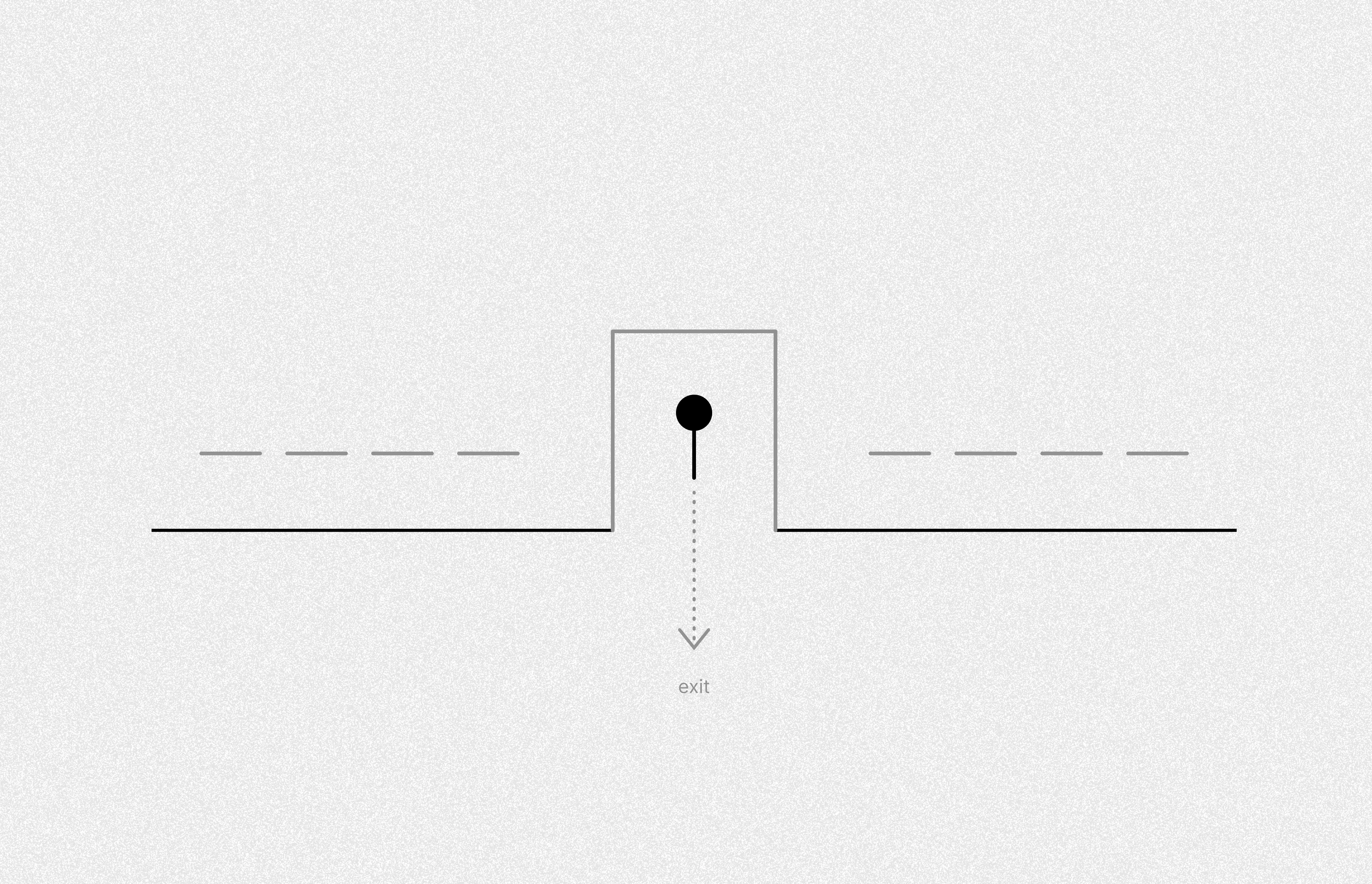
An exit built into the endless feed
The door does get built. It is worth seeing where. In Europe, regulators have begun treating engagement design as a liability. The European Commission has found that TikTok’s infinite scroll and autoplay breach the Digital Services Act and signalled the company may have to change the basic design, with penalties that can reach six percent of global revenue. The same regulators dismissed the screen-time warnings TikTok already had as too weak to count, which is the bolt-on losing in plain view and the incentive being reattached from the outside, with a number large enough to matter. Elsewhere the door is sold as a separate object: phones that deliberately leave the feed out, and a calm-technology certification that scores products on whether they sit in the periphery rather than the center. And there are tools like one sec, which places a breath between you and the app you open out of habit and, in a peer-reviewed study, cut app openings by more than half. A microboundary, shipped.
But look at who builds each one. A regulator changing the cost. A standards body inventing a new incentive. A hardware maker selling the absence of the feed. A user installing friction onto an app that would never add it on its own. The party almost always missing from that list is the platform whose business is the engagement. The exit gets built from the outside, because on the inside the incentive still points the other way. That is the mechanism under all of this, and it implicates me more rather than less: the people best placed to put the door back are the ones with the least reason to.
For AI the stakes rise again, and calm technology turns from an old idea into an urgent discipline. The design question is not how cleverly this system thinks for you, but whether it hands your turn back. Whether it stays in the periphery and steps to the center when needed, or pulls everything to the center and never returns it. A good system will feel like it knows when to be quiet.
I do not have the full list. I do not know exactly which seams we should refuse to dissolve, and I suspect some will only become visible once they are already gone. That is the most honest thing I can write: the person helping build this merge does not yet know which parts should have been left unmerged.
I am not asking to bring back dial-up. I do not miss waiting a minute for a single page. But the silence after the click did something we never counted. It gave the day an edge, and the edge is what made “here” feel like here. It used to come for free, as a property of the medium. Nothing comes for free anymore.
So the question worth carrying forward is not “how do I log off.” The door is gone. The question is whether we, the people who design the surface where others spend their lives, are willing to build that edge back on purpose, against every incentive not to.
We used to be able to log off because someone left the door open. Now, if people are still allowed a moment to stop, we are the ones who have to put the door there. And we had better know why it is worth putting back, before we forget it was ever there without anyone having to ask.
Works cited
- Road Ahead on Unsplash
- How social media feeds evolved to stop you from stopping by Kian Malekanian
- The Design of Microboundaries by Cox et al.
- Continuous Partial Attention by Linda Stone
- Seamful and Seamless Design in Ubiquitous Computing by Chalmers, MacColl
- Calm Technology by Amber Case
- Principles of Calm Technology by Amber Case
- European Commission: TikTok’s addictive design breaches EU law by Adele Zeynep Walton
- The effect of a micro-boundary on smartphone usage by Grüning et al.