Diego
Music
Photos & Interview by Will Sertorio
If we designers spend all day creating on screens (and now terminals), why are we never fully satisfied? And why do manual hobbies feel like the missing piece?
This is a series of visual essays I put together trying to answer those questions. Portraits and interviews with digital designers, and the hands-on hobbies they keep.
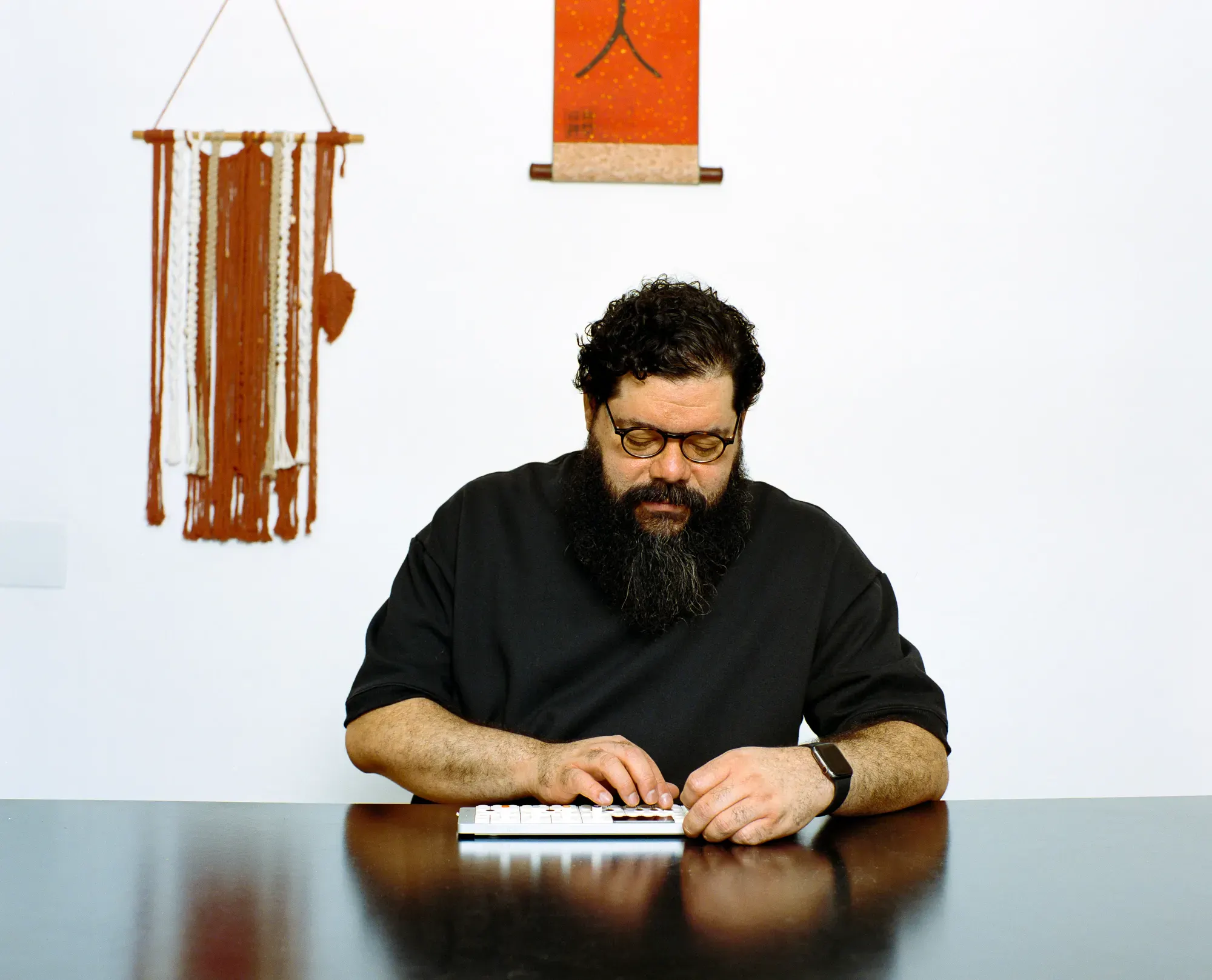
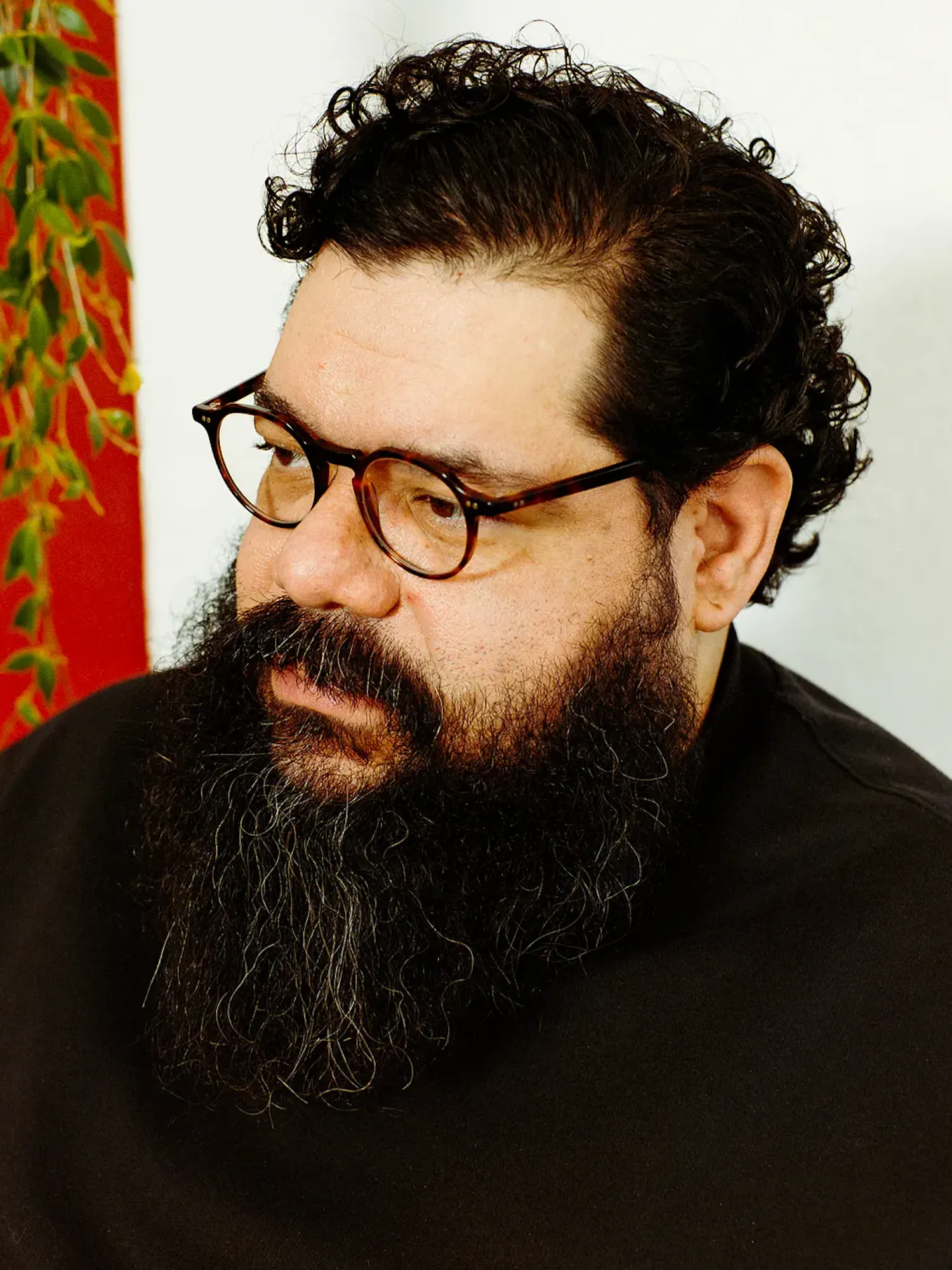
Meet Diego.
CPO, music maker.
How did you start and why this hobby?
I believe it was a series of factors or maybe facilitators; one of them might have a lot to do with the way my parents lived. They did a lot of things by hand; they built things, fixed things, created new things, cooked. So it was a piece of clothing made and sewn; it was a new recipe invented. So besides the traditional work they had, a lot of the time at home that I witnessed, they were making things with their hands, not just replicating. I think this point has a lot to do with the way I started to see music too. I remember that at some point my sister started taking piano lessons; she got a piano. Maybe I must have been like 5, she was 11, and there was one of my first contacts with the instrument. After a few years, I was together with some neighbors playing a board game, and a friend of mine, Cecília, showed up with a guitar, and there she taught me the first chord, which was G. So from there on, there with her was my first contact with the string instrument. And there I went, let’s say, taking my own steps. But I think it starts with this: my parents’ relationship, the openness they also had to expose us to music and to art in a way.
So a lot of my context, of my surroundings, and then came the friends also making music, not just playing, but also playing around with creating music, and I think that ended up becoming a pretty natural path.
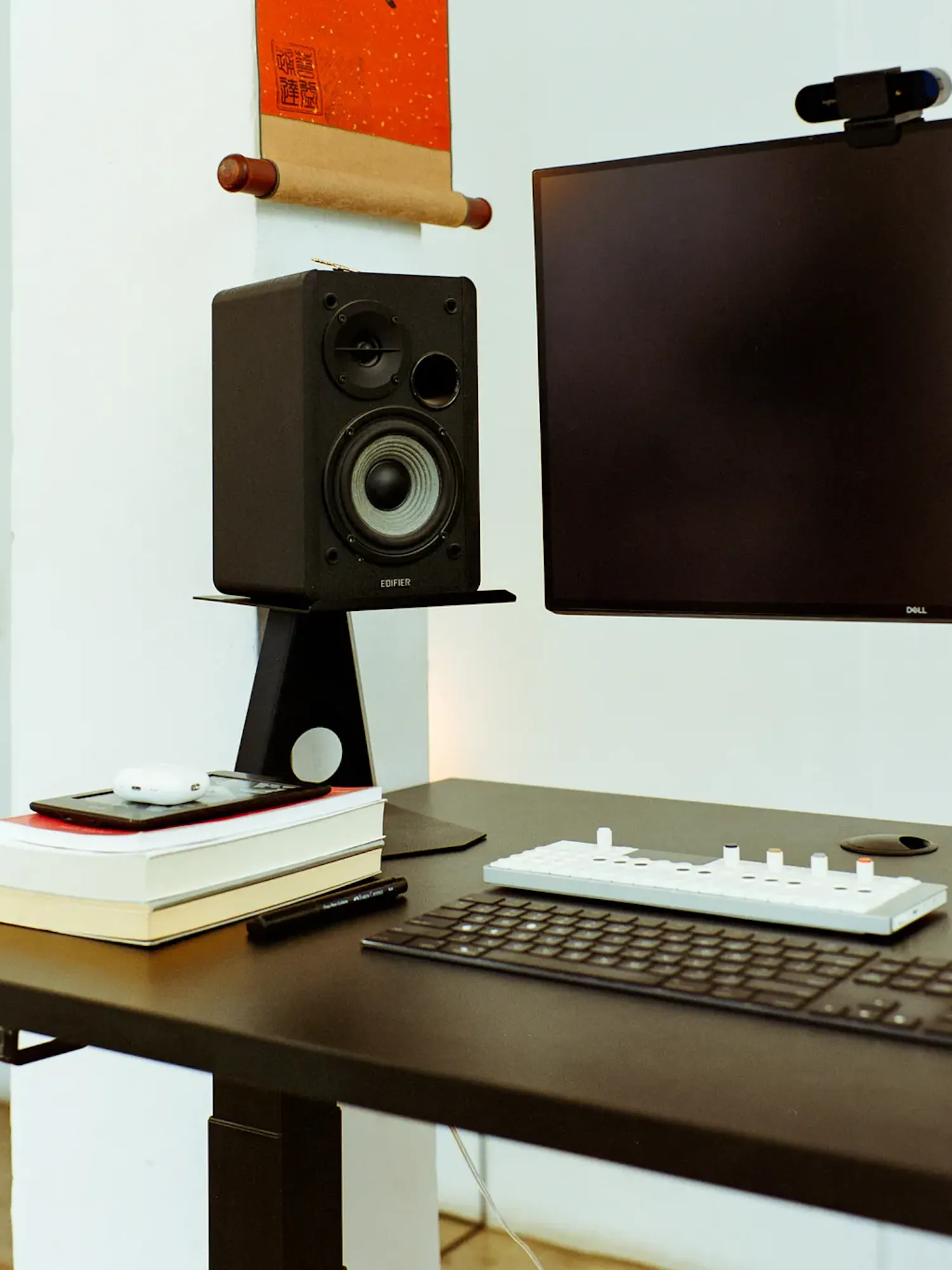
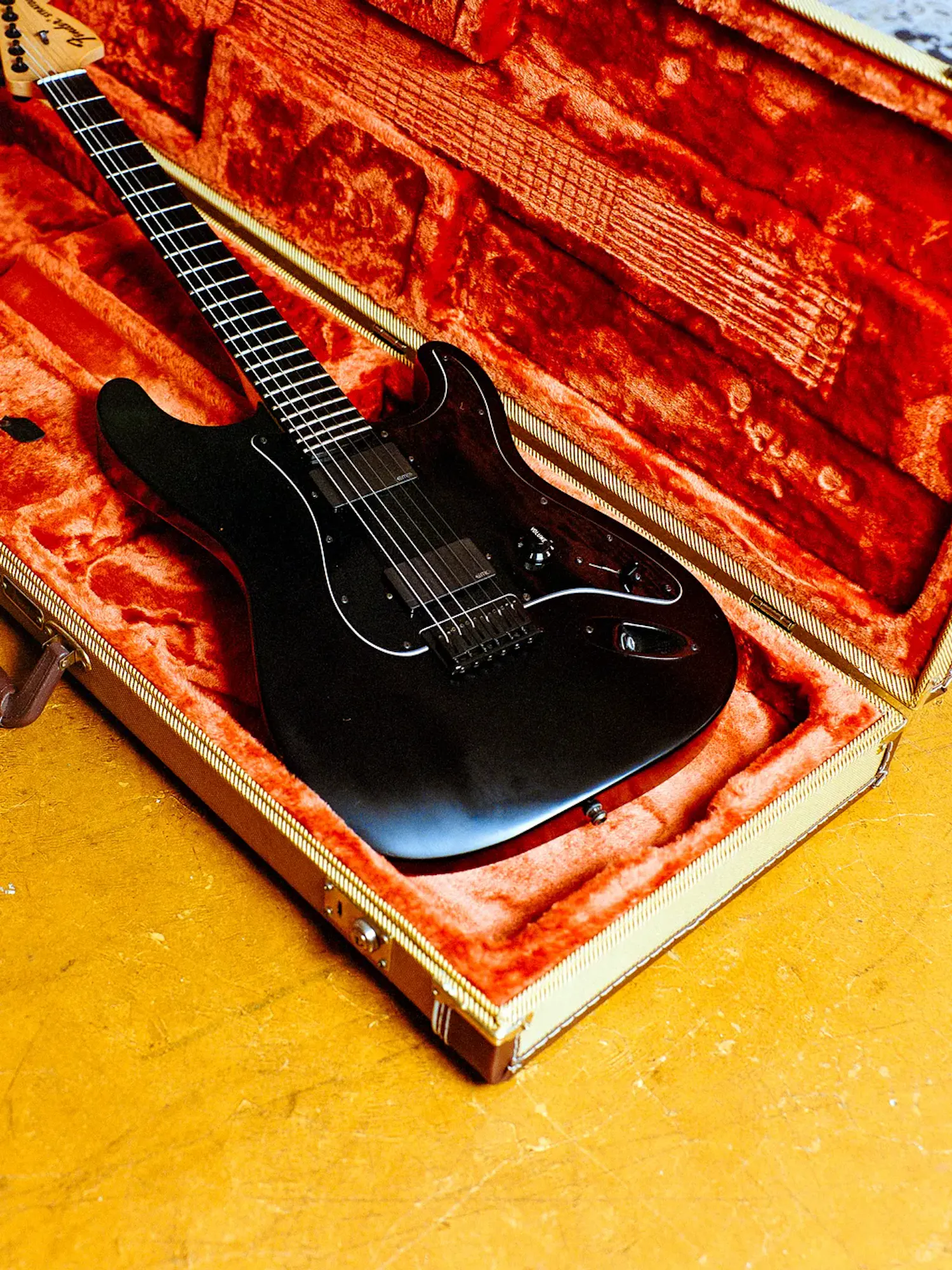
Workstation (left) and one of his many guitars (right).
If your work is already creative, why do you need a creative hobby?
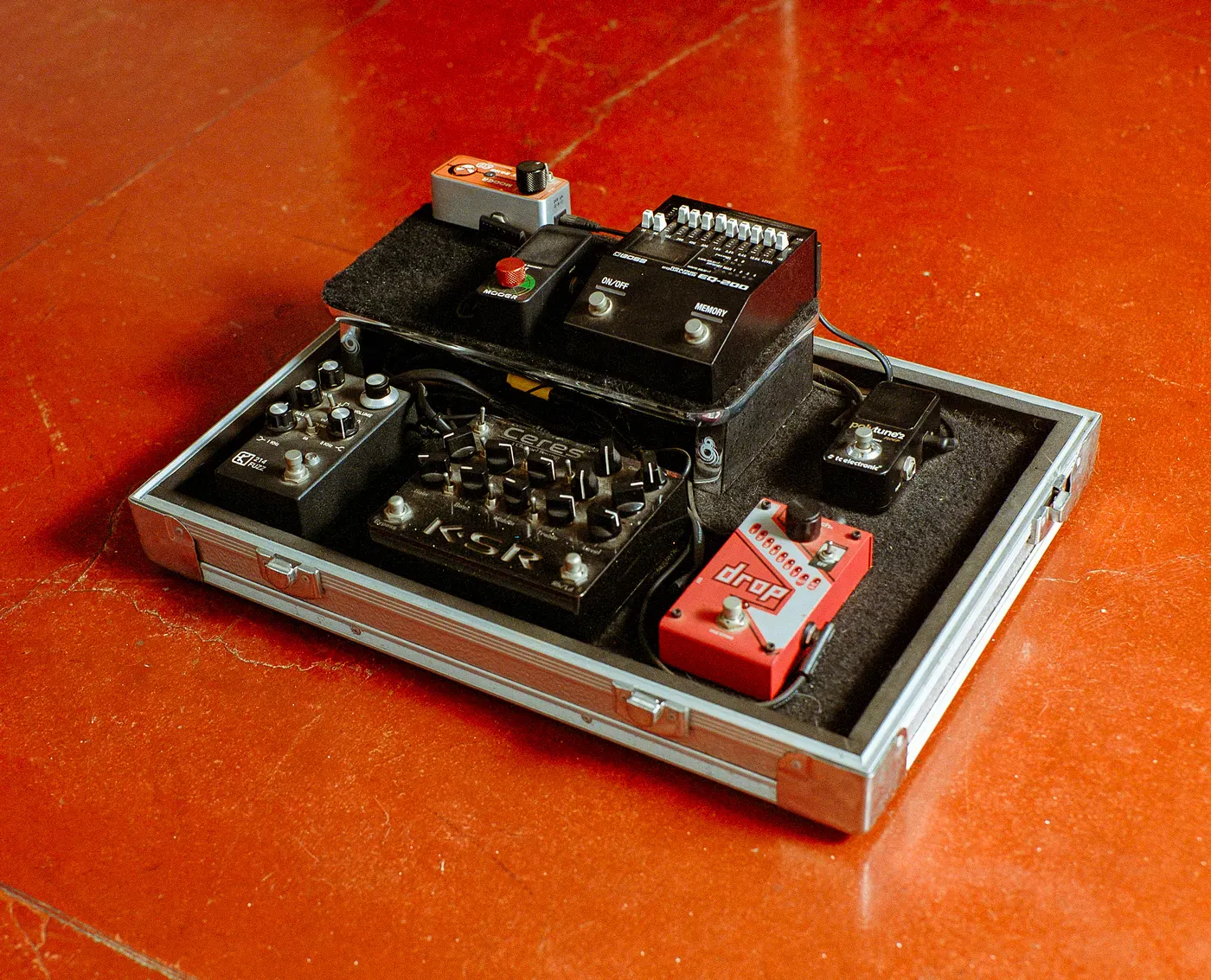
It’s really strange, isn’t it? This relationship between work and hobby, because… When I started messing with music, making music, since childhood and adolescence, this work relationship didn’t exist. This word hobby didn’t exist, right? Sometimes it seems like the hobby is made to serve some work, be it creative: have a creative hobby so it oxygenates your work. I don’t know if I see that relationship. For me, I don’t know, I simply lived that way. It’s like a way of living, doing something. So, there are people who, I don’t know, live to cook really well, you know? And so, for me, it was that: it was living, making a song; it was the way that occupied my time. So, for me, it makes sense to see it this way, you know? The work came after my life, my routine. And I remember really well that, at some point, in my first work experiences, I saw it as a driver of what I wanted to do with music. So, I said, damn, so, if I work here with this thing, in the end I can buy more guitar pedals, I can test more equipment, I can test new instruments. So, I can, maybe, buy some software to make a better production. Wow, I can sample some sounds. So, I think for me it’s an opposite relationship. It was, right? I think things got a little distorted afterward, but… I think that’s about it. I don’t know if one thing needs to justify the other or override it. I think the way I express work is totally related to what I express in music.
Much more geared toward creation than maintenance. So, maybe learning to play a song that already exists, it’s a… It has a technical purpose of getting to understand how that was made, but it’s not the end for me of the relationship with music, for me, anyway, it’s creating things and finishing things, to start new things, so… Man, I think I don’t know if it ends up being an answer for why I need a creative hobby, I can’t justify that, why needing a creative hobby, but the opposite, I think I can justify.
Maybe I need a job to keep making music, experimenting with new stuff.
These days, many people are creating new instruments. Man, I’d still wanna experiment with a lot of stuff, so work comes as a part of that. It’s the answer I can give now; maybe it takes another shape from the moment I reflect on this in the next hours or days, because I’d never thought about it from this side.
What do you do to keep your hobby alive in your routine?
When I had a tighter schedule, I had a lot of difficulty keeping consistency because of energy use, really, right? It’s energy and willingness. So, the work week I have, it demands a lot, and I also give myself a lot to building things, solving problems. But what I learned over the last years is that these problems will always exist and will always be there. And one practice that made a big difference was inverting my schedule. So, generally they’d find time to do the things I liked when the end of the week was approaching, or even the weekend, right? But I say the end of the week approaching things like Thursday, Friday, right? And Saturday and Sunday were a mix of wanting to rest, wanting to do things I liked regarding music and all.
And that never worked, right? So, I inverted it. There’s a moment I put on Monday morning, for example, my guitar lessons. So, it started at nine in the morning on Monday, and that made me start the week in a much more energized way.
Nobody needs to know, right? How I’m using my Monday morning, but it was a practice that for me made a total difference. So, there’s also a taste of me already allocating for myself at the start of the week something that’s important to me. And not on the tracks of the other people I worked or work for. So, I think this satisfaction or need or the way of organizing has some ramifications, right? Because I start the week energized, so I can do work, let’s say, creative for me. But that also demands, right? When we talk about technical evolution in music or in the hobby, let’s say. I wanna do more, wanna do better, wanna dedicate myself to how to put things, finish things, explore sounds, references, anyway, different things. And there I already address something that for me is really important, always has been. I think that was the way I found to be able to organize it in my routine. And not only that, not only the specific hobby of music, but also other things, other matters, personal care too, no? Sometimes an appointment, sometimes the language, so there I started to address for myself already at the start of the week the things that are important to me.
What do you do when you get stuck or lose the will?
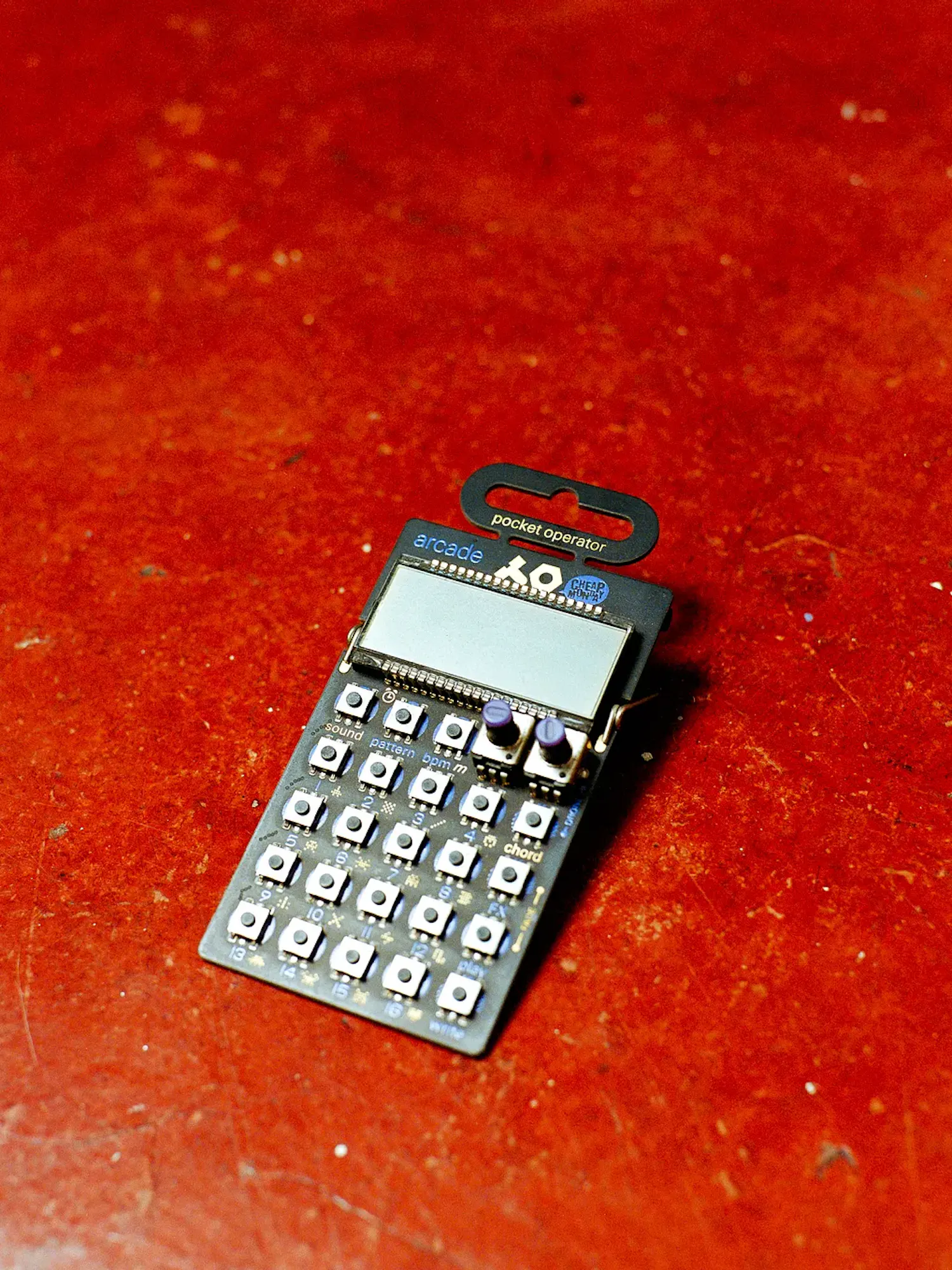
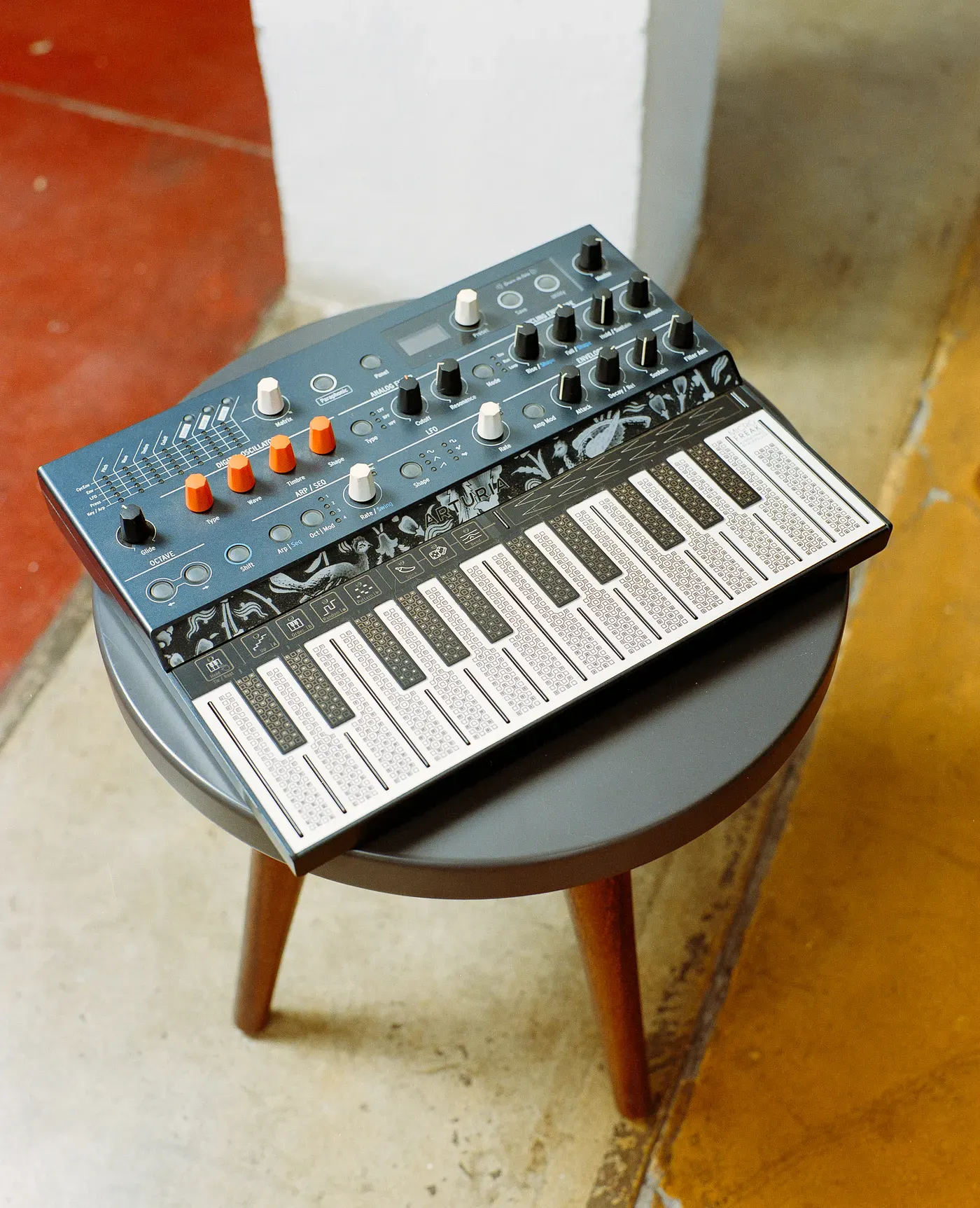
Before, I used to get pretty frustrated because of consistency, especially in the moment where work got tight. But these days I don’t force it; I understand they’re phases, cycles, sometimes months, depending it can get to years without composing anything. But I’m always playing around, leaving the instruments near me, preparing an environment, not just a schedule, but also an environment and facilitators for you to be able to touch that more easily. So there’s a point about facilitators too, like looking for technologies that don’t need to be plugged into 20 cables to start playing, looking for portable instruments, like smaller synthesizers, that I could leave on top of the work desk, or that I could take on trips. So there were also physical hardware adaptations for me to be able to fit this better into the routine and not stay so far away from it. So when I lose the will, I let it roll, because it’s also not so linear: work, the hobby, and that’s it; there are other things too that I wanna experiment with, not just music, relationships, friends, anyway. There are other variables there, where I also wanna dedicate my time, so they’re phases that come and go, and I respect them a lot.
What would you say to someone who wants to start/pick up their hobby again?
Schedule and environment facilitators. So the schedule is prioritizing in your schedule the time for you to do what you wanna do, need, or like to do. Even if that later disperses, I think this awareness of putting in front what’s important to you makes a big difference. You don’t need to answer to anyone about it. And when I say environment facilitators, technology, routines, it relates to what I mentioned. Sometimes, I wonder if there’s a new piece of equipment that can go with you while you travel or have your adult routine along with you. I wonder if that doesn’t make it easier for you to pick up your hobby? I wonder if there isn’t a new piece of equipment that’s cool to experiment with, that changes the way you do that. So this smell of novelty within a field you like can also stimulate.
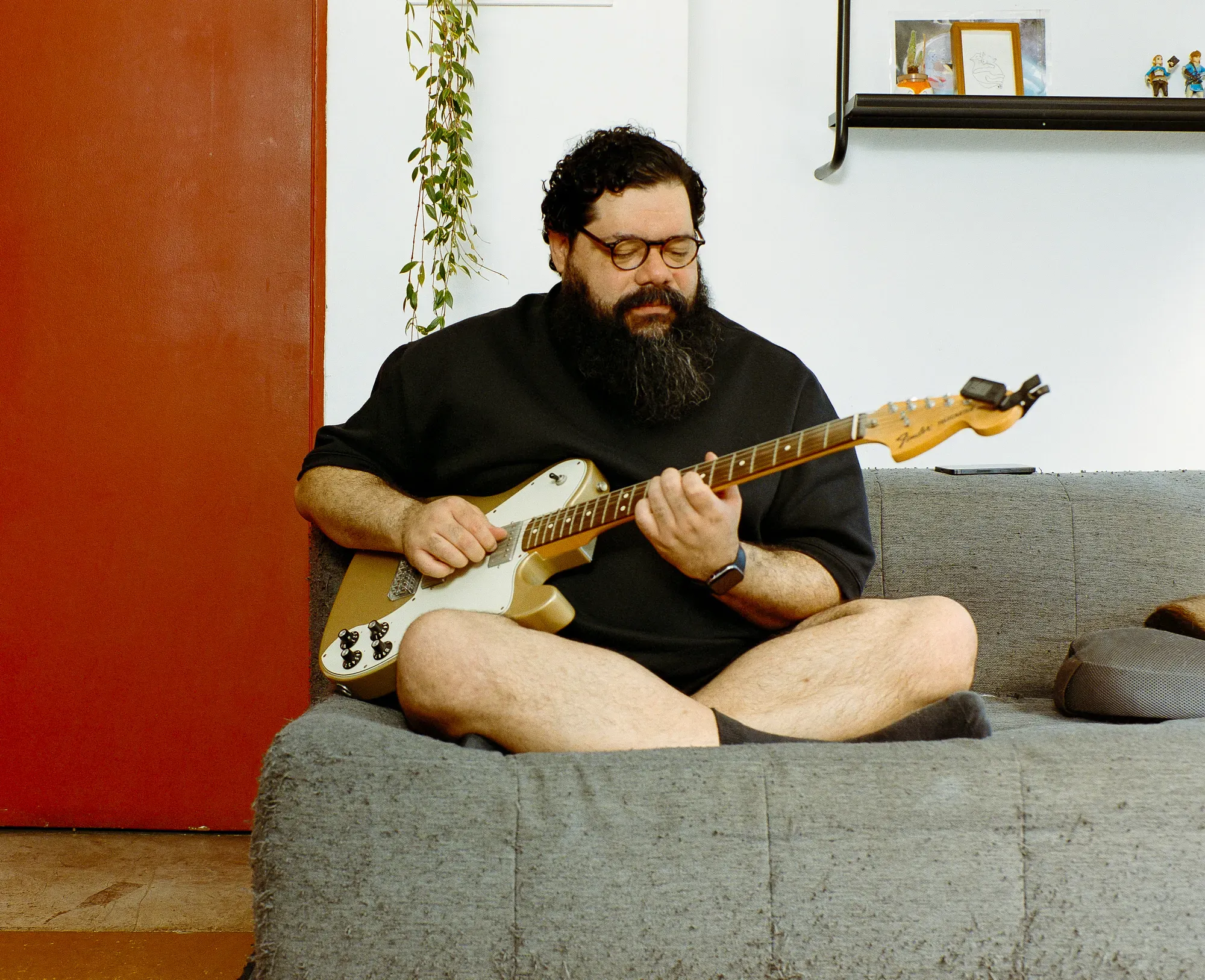
Groups or classes can also make a big difference because they can establish a fixed schedule for you. Every time in the week, dedicate yourself to that, courses, for example. I think that can help pick the hobby back up. So there was a moment there post-pandemic when I went back to taking guitar lessons. So, for example, it was super important to pick back up with more intensity what I already wanted to do. So I think I’d sum it up in this: the schedule is important; prioritize. And act on top of these adaptations of environment, routine, new technology that can help you, the person get interested again in the hobby, because sometimes it’s not just a question of schedule; sometimes the person needs to fall in love again with that thing, or actually take a liking to something that’s new, or actually have a nostalgic feeling.
Or sometimes just you revisiting an old photography album; that can rekindle a desire to touch that again. Or sometimes you go talk to a friend, a friend who was part of your circle when you played, gamed, photographed. And that brings back a new look at this hobby. So I think there are several different ways like this, but that was it. In adult life, the schedule is what I discovered first, and then understanding or exploring these variables that can help the person touch that. I think this point of touching it is important; it’s not loose, it’s grabbing, touching, be it your main work instrument or a hobby.