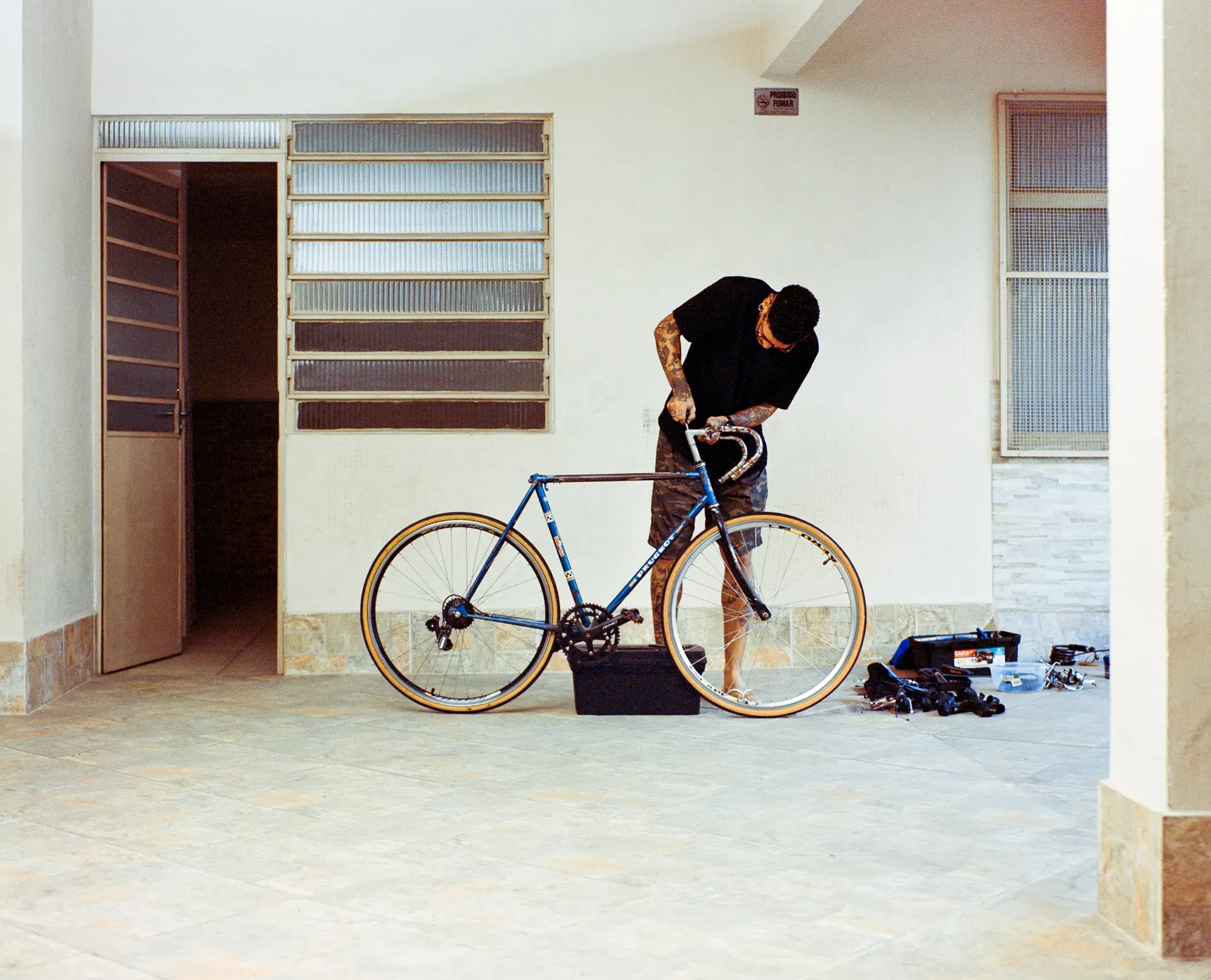
Felipe
Bike repair
Photos & Interview by Will Sertorio
If we designers spend all day creating on screens (and now terminals), why are we never fully satisfied? And why do manual hobbies feel like the missing piece?
This is a series of visual essays I put together trying to answer those questions. Portraits and interviews with digital designers, and the hands-on hobbies they keep.
Meet Felipe.
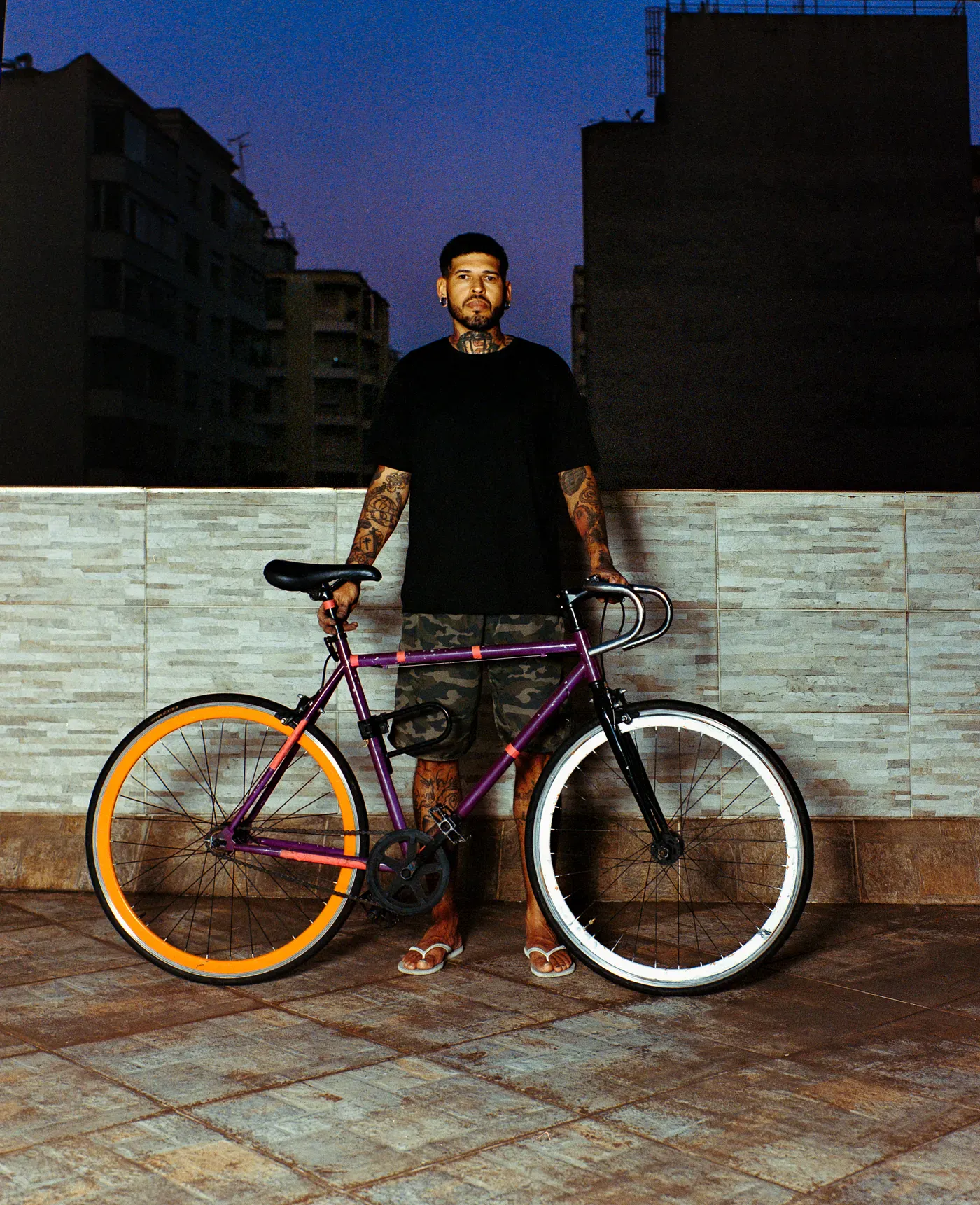
Product Designer, repairs and customizes bikes in his free time.
How did you start and why this hobby?
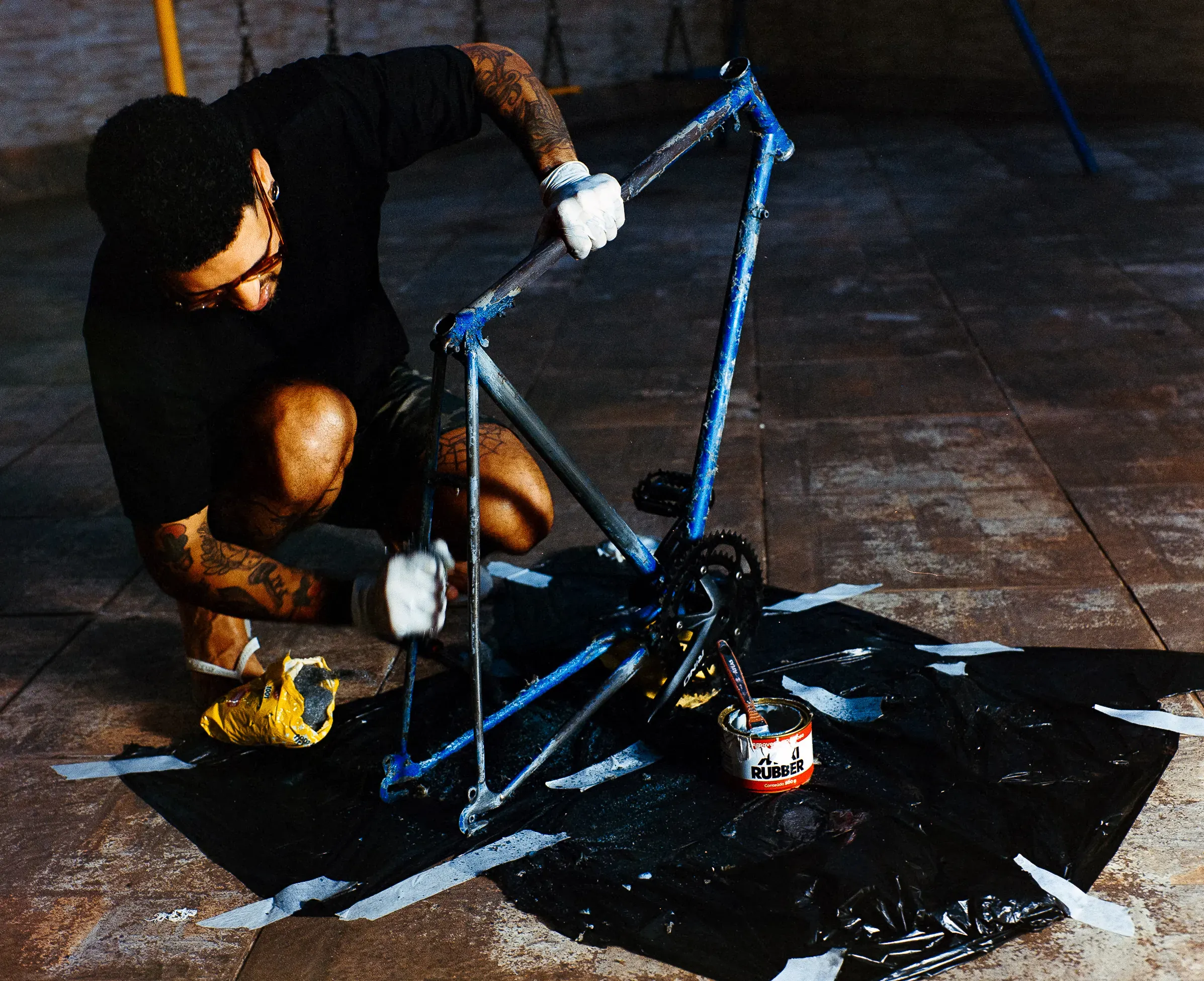
I always liked messing around and tinkering with bikes: doing all the basic stuff since I was a kid, changing a tire when it went flat, patching a tube, a brake cable, the simplest things. And then when I was a bit older, I found out about the fixed gear bike scene, and the whole thing was that, right: building your own bike with simpler components and all. I thought it was super cool, and since then I got interested in building fixed gear bikes.
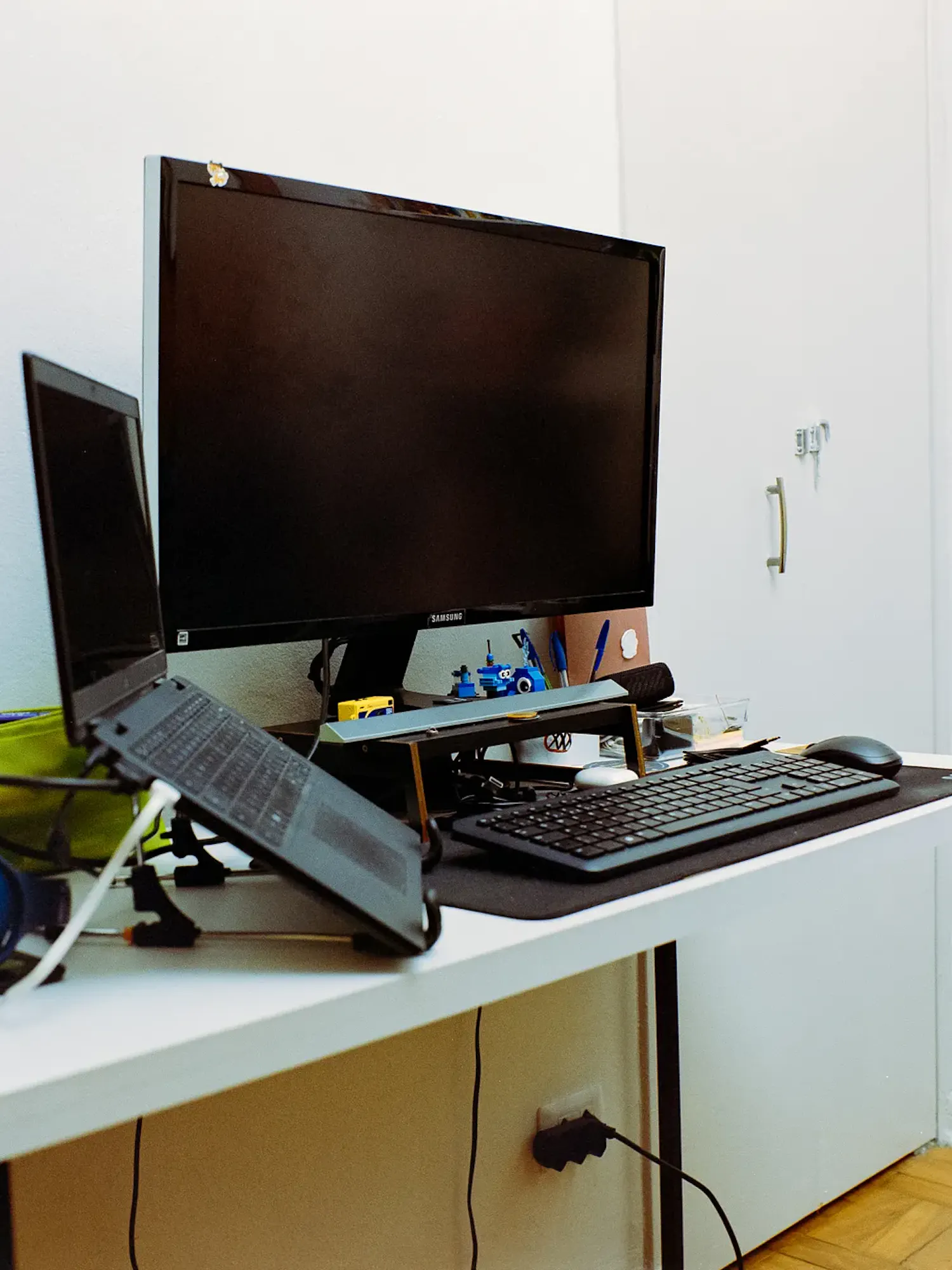
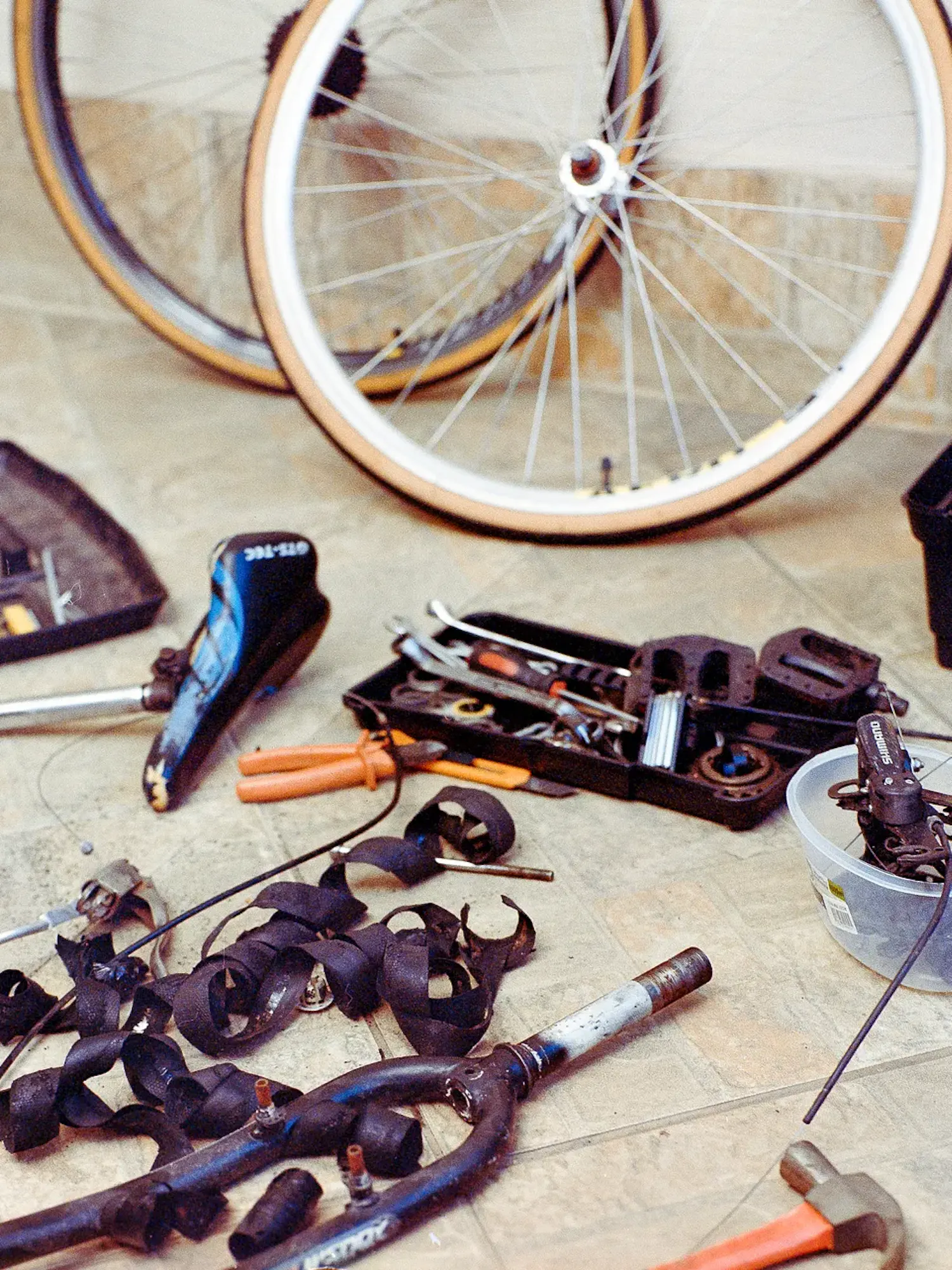
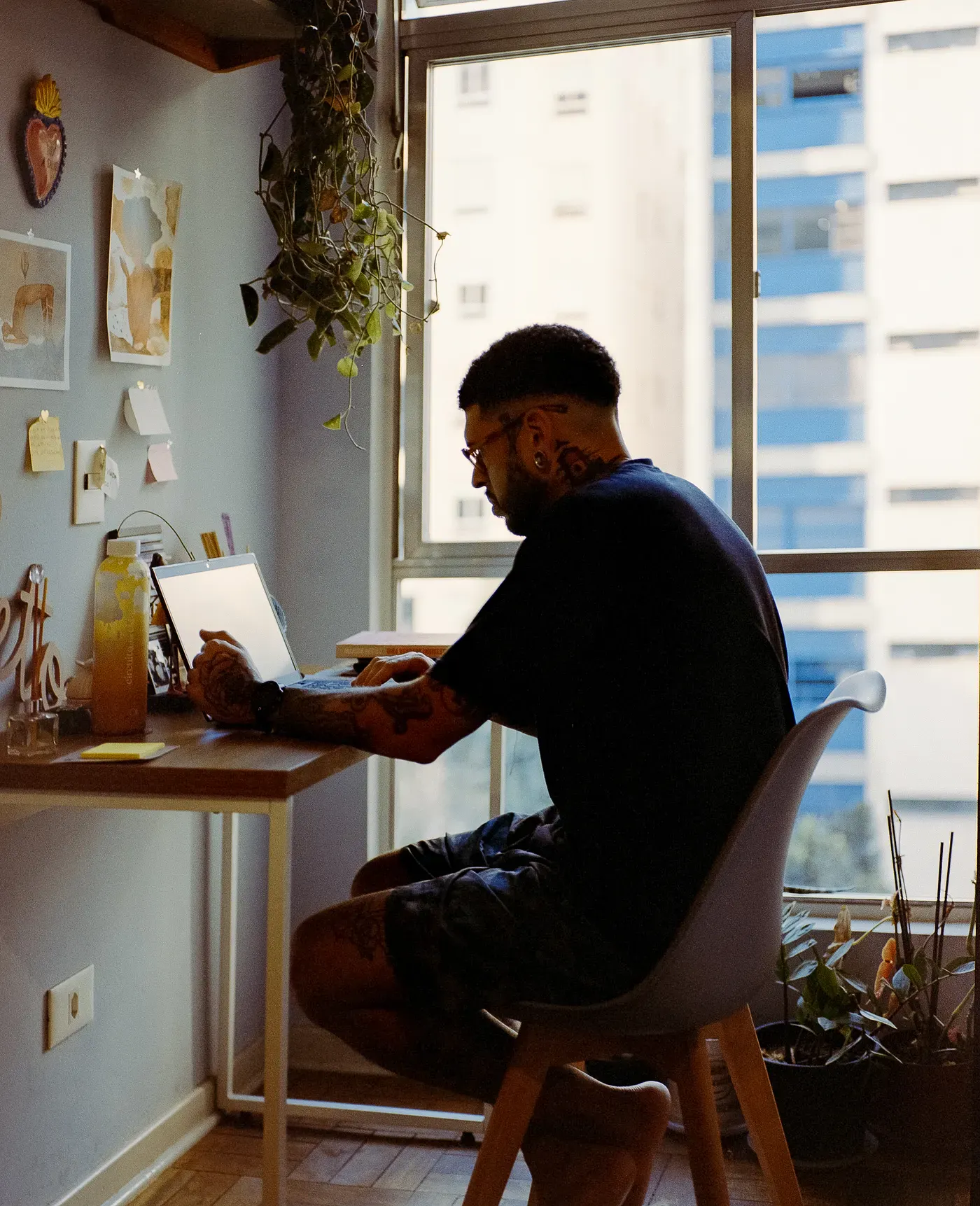
Felipe's workstation (left), some bike parts and tools (right).
If your work is already creative, why do you need a creative hobby?
I think our work is creative; in my case, being a design person, but inside a company I don’t have total freedom to express my creativity. There’s always someone approving, a client who hired you, whatever. You’re inside a team, so it’s creative; I do a lot of what I like, but not 100% of what I would like to do. I think the cool thing about the hobby is this: it’s you doing what you want, without the pretension of pleasing people. You’re pleasing yourself, doing what you wanna do; I think that’s a really cool thing about the hobby. Sometimes people question, like, oh, your hobby could make money, but I’m always on this fine line: I wonder if I monetize my hobby, does it keep being my hobby, or is it gonna get boring like a job, you know?
Felipe uses Pinterest + ChatGPT to plan his bike designs.
What do you do to keep your hobby alive in your routine? (ex: put it on the calendar, set a goal, etc)
The bike is a living object in the routine. You’re always riding, getting around or training. It’s a thing that the hobby itself pushes you, right? Like, damn, I wish I had a different bike, what if I had one in such and such color? I’m gonna sell this one and buy another because I wanted to make it this way, you know? So it kind of feeds itself in the routine. Wanting to tinker, to do something more, or buy a new part and do an upgrade.
What do you do when you get stuck or lose the will?
I think the cool thing about the hobby is even this: not pressuring yourself, you know? Because sometimes getting stuck is the time you really need to create something, to keep thinking about it. I think this idleness we have, this freedom in the hobby, of I don’t have a deadline pressure, is interesting. But when I get stuck on a technical thing, then I go look for help in groups, I go ask friends who’ve done it, I go to some shop to, anyway, get tips. But when it’s like, oh, I’m just leaving it for later, I don’t have any ritual I do, like, so this doesn’t happen.
What would you say to someone who wants to start/pick up their hobby again?
I think everyone should have a hobby. All people, of all ages, no matter what it is. If your hobby is playing a sport or playing a board game, a card game. Even video games, whatever, do it because it’s really important. And testing too, right? For those who wanna start and think they don’t have a hobby. Go to a ceramics class, see what it’s like, take a gardening class. Take a painting class. Without pretension. Or don’t even take a class, watch a tutorial on the internet, try to do it. I think the important thing is to start because I think you really discover the hobby. It’s something you go discovering that you like, so I think you have to start. And whoever wants to pick it back up, it’s picking up with what you have; sometimes we’re very like, oh, but I need to buy this, buy that, no. Pick up with what you have, and I think the hobby keeps feeding itself, right?
As it gets more into the routine, you give it more time, buy more equipment, if necessary. So I think both for whoever’s starting and whoever wants to restart, it’s to start, do it.