Tiago
Aquascaping
Photos & Interview by Will Sertorio
If we designers spend all day creating on screens (and now terminals), why are we never fully satisfied? And why do manual hobbies feel like the missing piece?
This is a series of visual essays I put together trying to answer those questions. Portraits and interviews with digital designers, and the hands-on hobbies they keep.
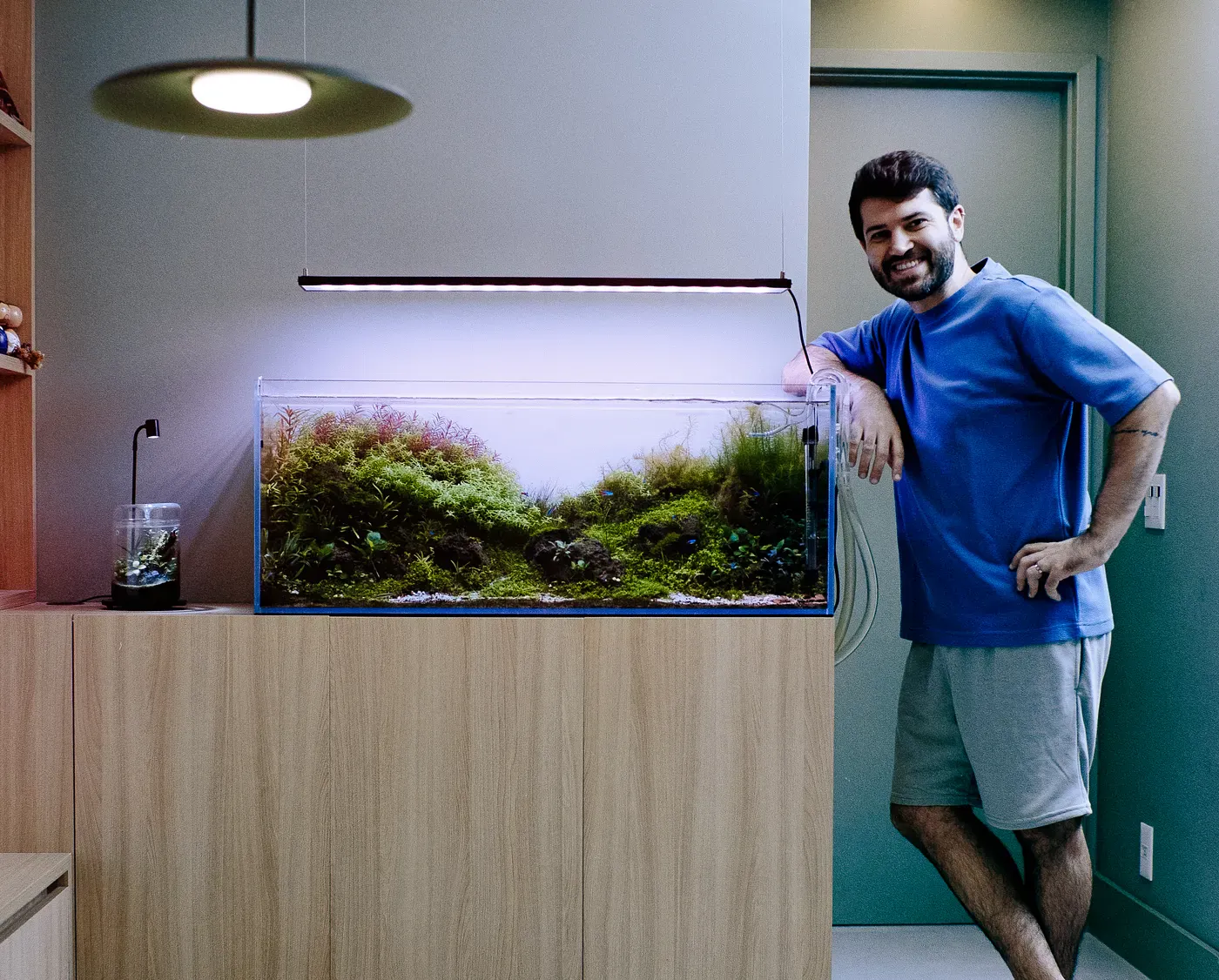
Meet Tiago.
Product Designer, does aquascaping when his kids are sleeping.
How did you start, and why this hobby?
So, there was this thing at my dad’s house that had a big aquarium; I’d spend hours there looking at the little creatures, the fish mostly. They had a fish that’s called a Goop, and it’s got a fin like this, really pretty, colorful. And then, I had an aquarium at my mom’s house too, smaller, few fish. After that, it evolved into a turtle tank. And then, like, after adolescence, I didn’t have one anymore; we took it apart, got rid of it.
And someday I went to the pet shop to get, I think, maybe, sand, and some food for the cats. Then, one day, my daughter, the oldest, she glued herself there to the glass of the aquariums and went like, look, daddy, look, daddy; it was like going back to the past. And then, I said, ah, I’m gonna set up an aquarium for her, right? And then, I started to see that the fish weren’t doing well, like. Then, I remembered a friend of mine who was into this aquarium thing. He said: it’s all wrong; you’re not giving a good life condition to the fish and all. And then, he told me he started doing aquascaping. And then, he sent me a photo.
When I saw that, I said, wow, that’s wild!

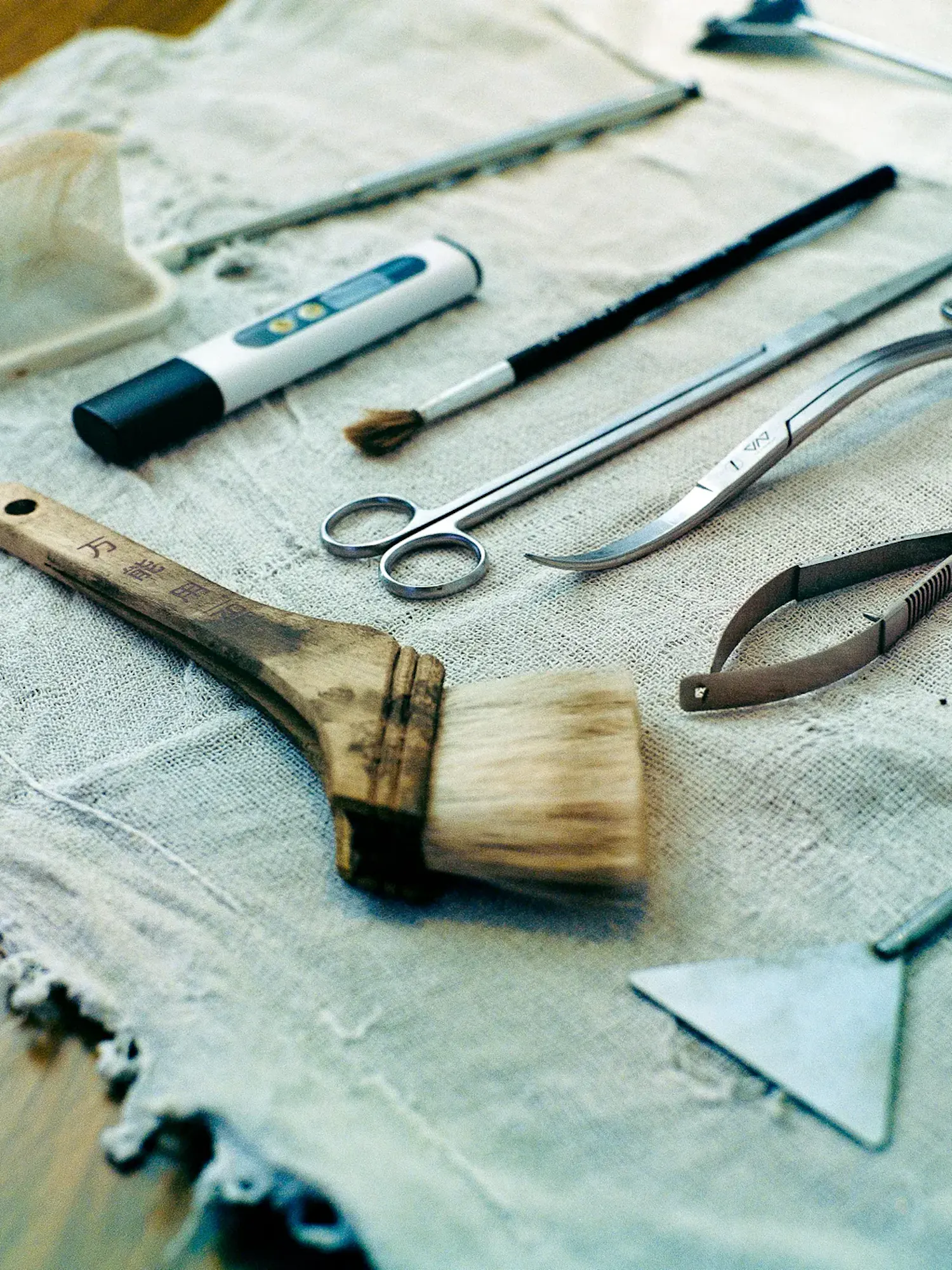
Tiago's workstation (left) and aquascaping tools (right). And for this red stain, I make mistakes too, ok? :)
If your work is already creative, why do you need a creative hobby?
I think like there was a moment in my work when it was a little repetitive; it wasn’t as creative as I’d like, and actually I started the hobby as a trigger for reliving what I had in childhood, right? Which was the aquarium at my dad’s house, and that, plus my daughter’s perspective, was what was the initial trigger, and then I started giving my creative touch to the approach from the moment I found out about aquascaping. So it was also a way to exercise this creative side more in moments when my work wasn’t meeting that demand.
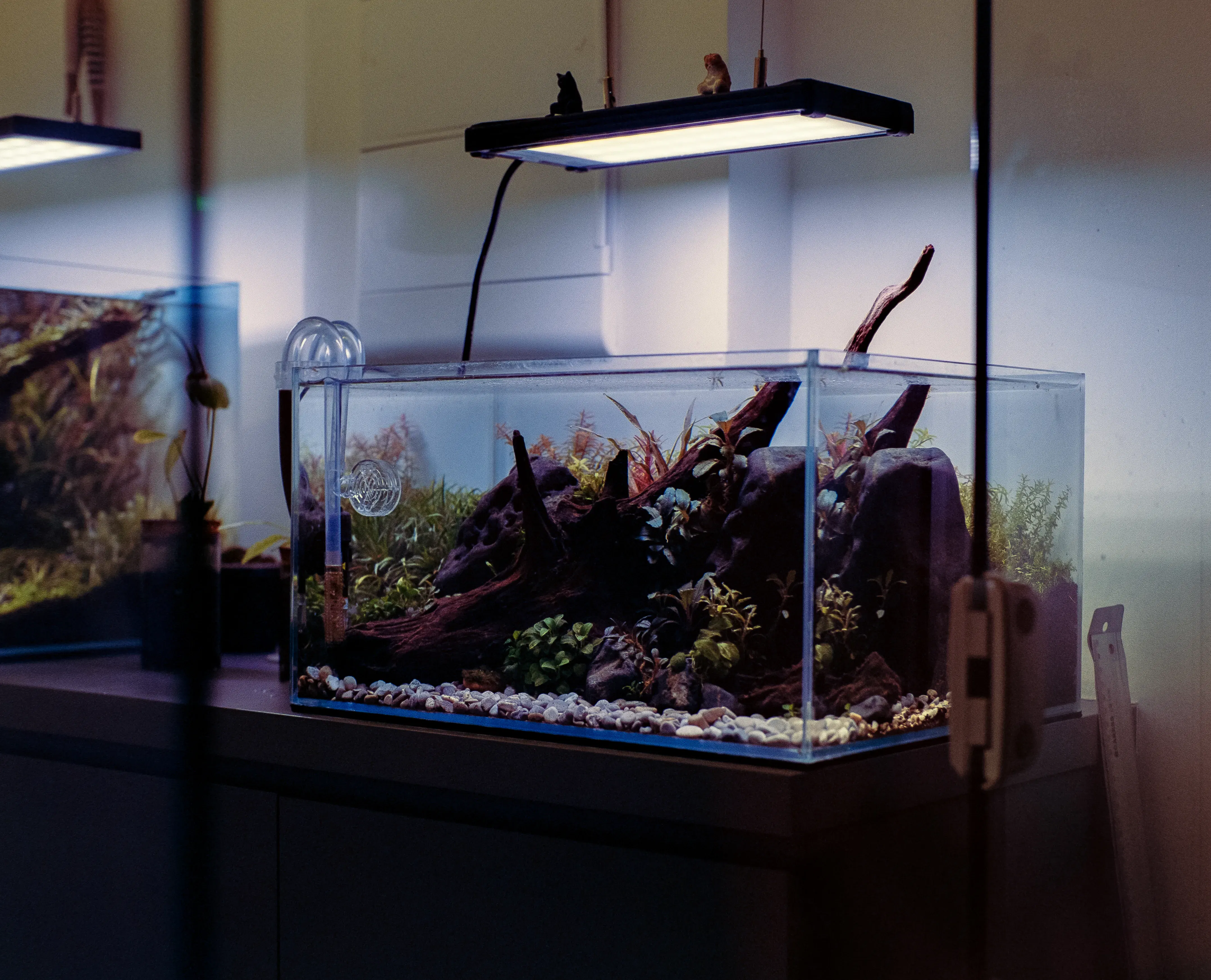
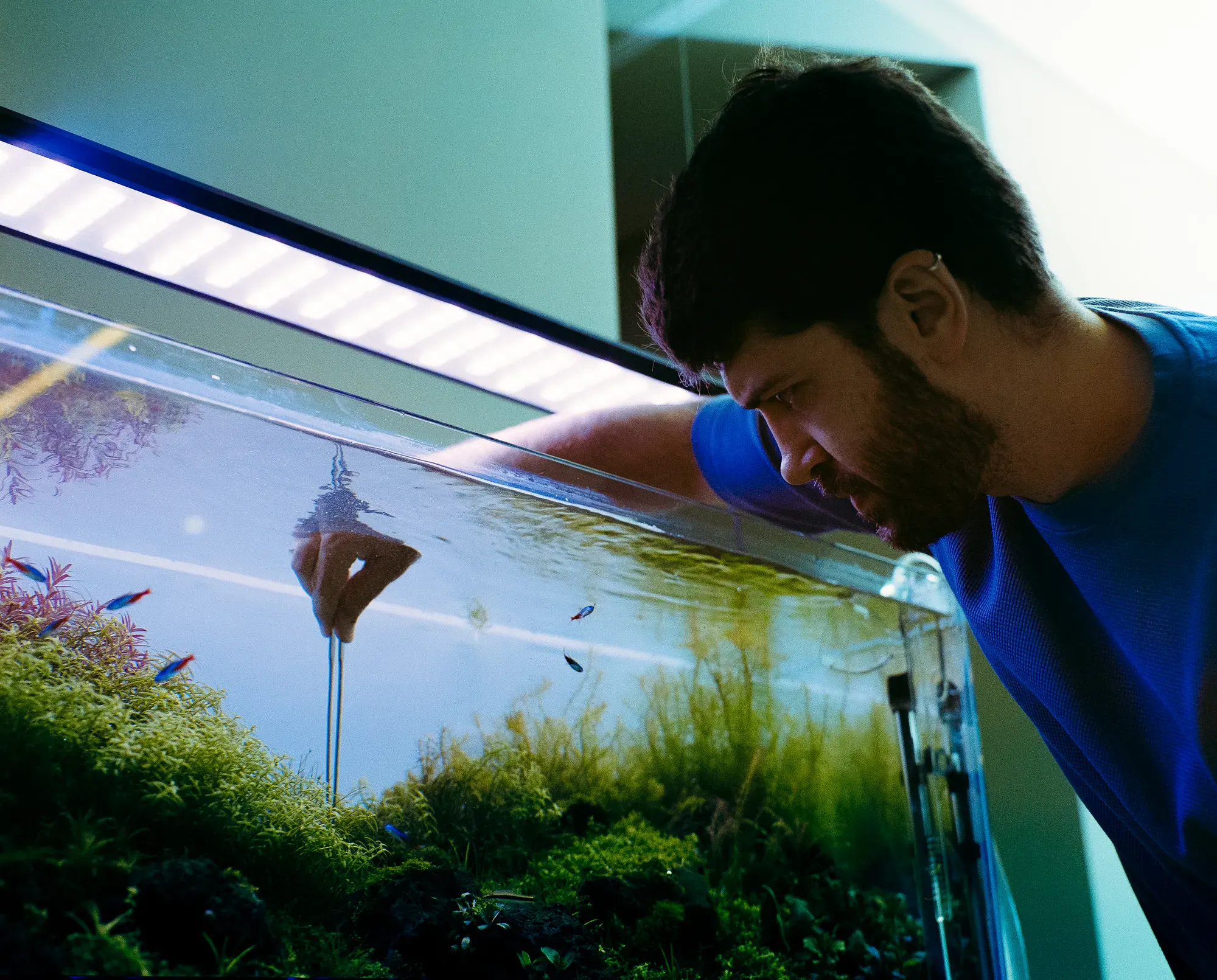
Tiago likes having multiple aquariums, so it's harder to get stuck/bored.
What do you do to keep your hobby alive in your routine?
Now I have a lot of free time, even, like, to be able to do maintenance and check on it. But when I was working, I’d do some small breaks of five minutes, then I’d stop, look for something, mess with some little plant and then drop it. The heavier maintenance always stayed for the weekend, or for the middle of the night, after the kids had gone to sleep. A phrase from a guy who worked with me that went like, bad news doesn’t get better with time.
So, the problem you see there, if you let it escalate, it’s gonna get worse, get it? So, sometimes it’s worth it for you to solve it right away instead of letting it get worse. But all aquariums have some time to mature. In the beginning, it requires a lot of maintenance. So, I have two more there inside the office. One of them I just set up. And if I’m changing the water, we’re practically in its first week, then you have to change water every day, 50% of it. It’s smaller, so it kind of makes it easier. But later, this big one here, now, it’s already six months old. So it’s already created kind of all the good bacteria for the aquarium. This makes it so you have to do fewer interventions, less maintenance.
What do you do when you get stuck or lose the will?
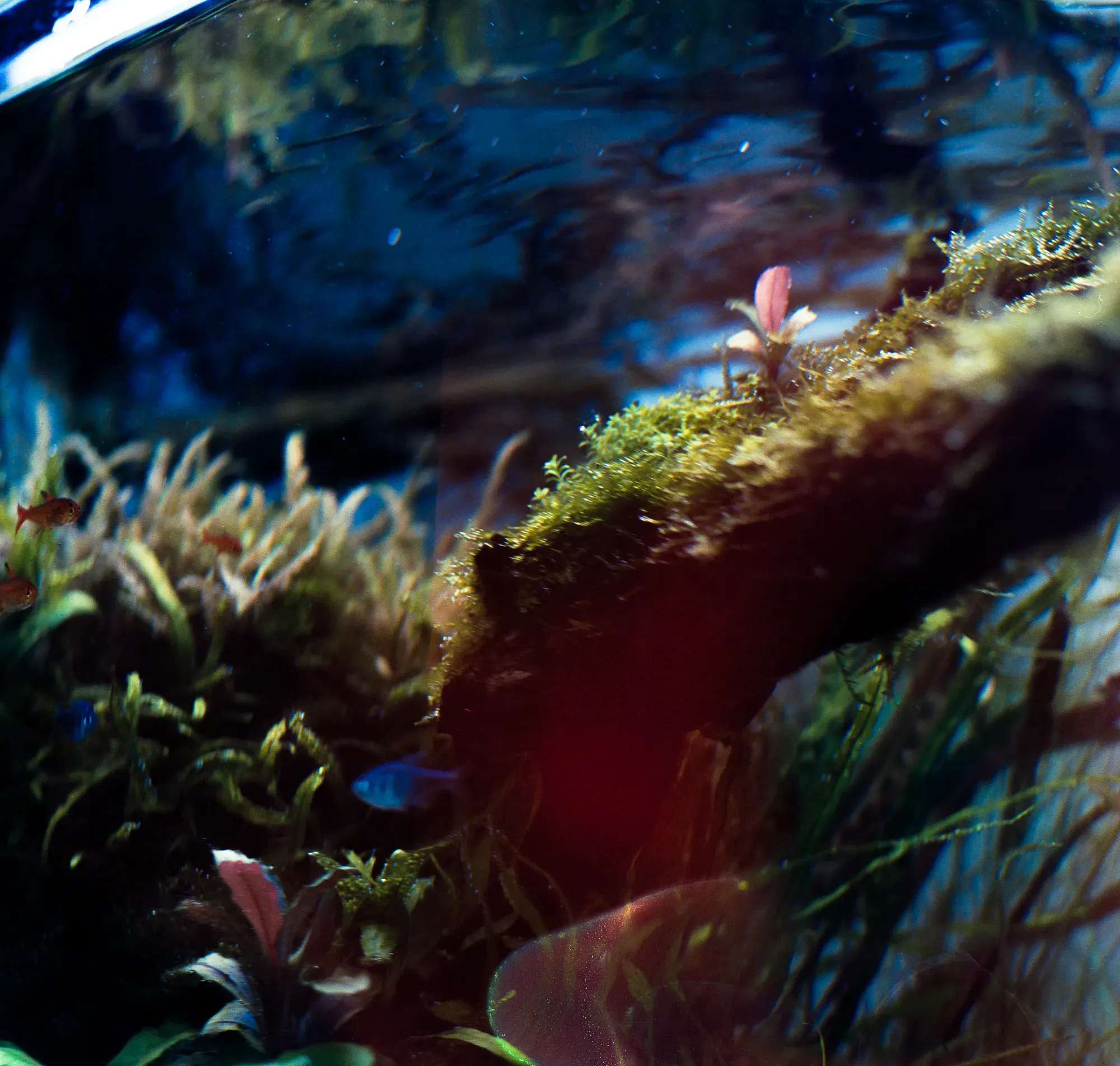
I think that’s the advantage of having more than one aquarium. So, I go to the other aquarium, take a look, try to do something different. And a lot of times I don’t do anything. I just admire it or get on with life and go do something else. I think in the beginning, when we set up the aquarium, you get more excited, but there’s always something new and then you end up getting used to it and spend less time messing with the aquarium. But, like, because it’s something alive, because there’s little plants dying there, little plants growing or even the fish moving around, the shrimp multiplying, I think there’s always something new, there’s always something different to look at.
What would you say to someone who wants to start/pick up their hobby again?
For aquascaping, I’d say don’t act on impulse; don’t buy the first thing you saw—maybe the aquarium glass or the aquarium filter, the light. You need to study the project you wanna set up as a whole, so you don’t have to buy a better part later. So you invest only once in something that really makes sense for your project.