Perspective
On rational thinking, taking action, and the courage to choose.
Photo by Florian Holzherr, installation by James Turrell
“What we see depends mainly on what we look for.”
➪ John Lubbock
Perspective is a lens through which we judge
It is the internal logic we use to interpret information (or to analyze a design) and assign value to different outcomes. A perspective serves as a filter, allowing us to distinguish between what is critical and what is secondary within a specific context.
Perspective is the art of exclusion
To have a perspective is to say “no” to things that are technically possible but strategically wrong. Most products fail not because they lack features, but because they lack a clear stance on what they are not. Every feature added without a clear perspective dilutes the ones that actually matter. Design is an editorial act: the more you leave out, the more weight you give to what remains.
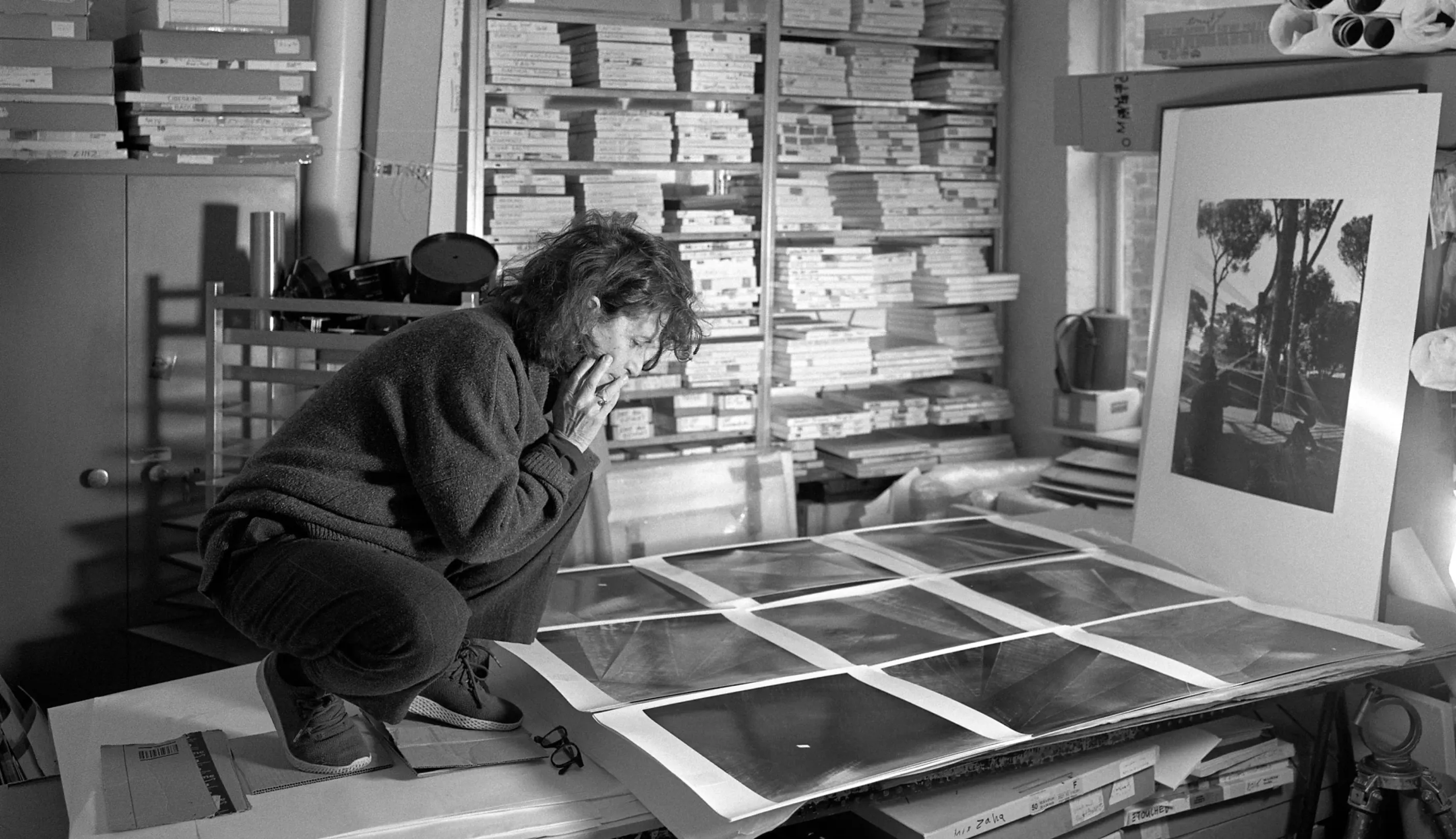
Hélène Binet is a photographer specialized in Architecture, bringing a unique perspective to famous buildings
Distinguish your perspectives from your preferences
A preference is a quiet, personal inclination, such as a color you like or a typeface you know has worked well in the past. A perspective, in a professional setting, is a structured argument that follows a rational chain of thought and that references the initial objective of the piece you’re working on. There’s no “I like it” when you’re articulating your perspective.
Great designers can translate subjective perspectives into objective strategies
You should be able to justify a choice not because it feels “right” to you, but because it is the most effective response to the problem at hand. When you present work, you are presenting a stance on why something must exist in this or that particular way. As you become more senior, your role is to help others also move from subjective to objective thinking.

Virgin America's site UX launched in 2015 was a big disruption to flight websites—having all booking steps happen inside a single page
Perspective is a position, not just a viewpoint
In design, we often treat perspective as a passive skill—something we simply “have” by virtue of our experience in the field. But true perspective is an active choice. It is the ability to stand in the future of a product and look back at the present to see which paths are actually viable. Without a deliberate perspective, design becomes purely reactive, losing strength with every new stakeholder request or market trend.
Perspective without action is just a hot take
A clear perspective, to be useful, has to translate into something actionable and real—and that applies to every aspect of your professional life. Instead of just saying “this is cool” when sharing a reference or link in your team’s channel, try articulating a sharper and more actionable point of view. Why is it good? How do you envision getting there? What are the actions you and your team need to take? And what’s the ideal outcome?
Your perspective must respect the project’s needs
One of the hardest transitions for a designer is learning to kill a good idea because it is not strategically aligned with the brief. You may have a signature style or a favorite interaction pattern, but if it doesn't serve the user and the business, it is simply an indulgence. You should be able to design a clinical, sterile medical app and a chaotic, vibrant social platform with equal craft and love, because your perspective is focused on the user’s success, not your own aesthetics.
A great designer is a chameleon of execution but a monolith of principle.
A collective perspective is not a compromise
Teams often mistake “alignment” with the dilution of ideas. They try to find a middle ground that everyone can live with, resulting in a product that feels like it was designed by a committee (too polite, too functional, too forgettable). Building a collective perspective means agreeing on a shared set of non-negotiable truths. It is better to have a team that is unified around a bold, singular vision than a team that looks for averages.
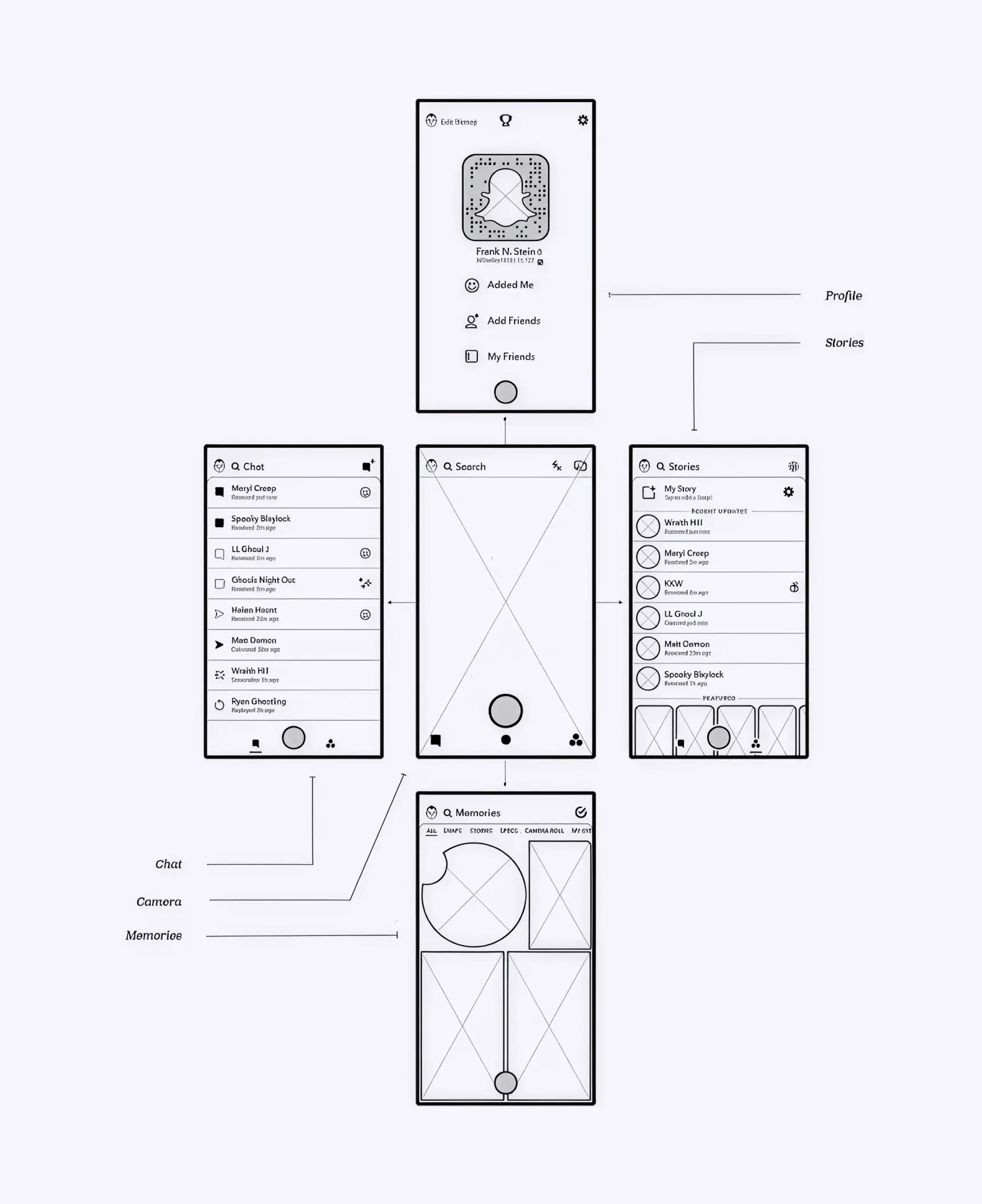
Snapchat's app UX had a strong perspective on a more fluid navigation system, tailored to younger audiences at the time of launch
If your design has perspective, it won’t please everyone
Talking about being disruptive and actually being disruptive are two different things. If your design is met with universal approval, that might be a sign that the work has drifted toward the safe, unremarkable middle. True disruption is an uncomfortable editorial act. Conviction requires the courage to be misunderstood by those who aren't your audience, in order to be deeply loved by those who are.
Perspective is most visible when the UI is invisible
As we move toward more automated, conversational, or voice-driven interfaces, our role as designers shifts to defining the system's logic and how it helps users get things done. Your perspective as a designer becomes the product’s personality. How does the system handle an error? How does it prioritize a user’s time? In the absence of a visual interface, the editorial choices you make regarding the system's behavior are the only design that remains.
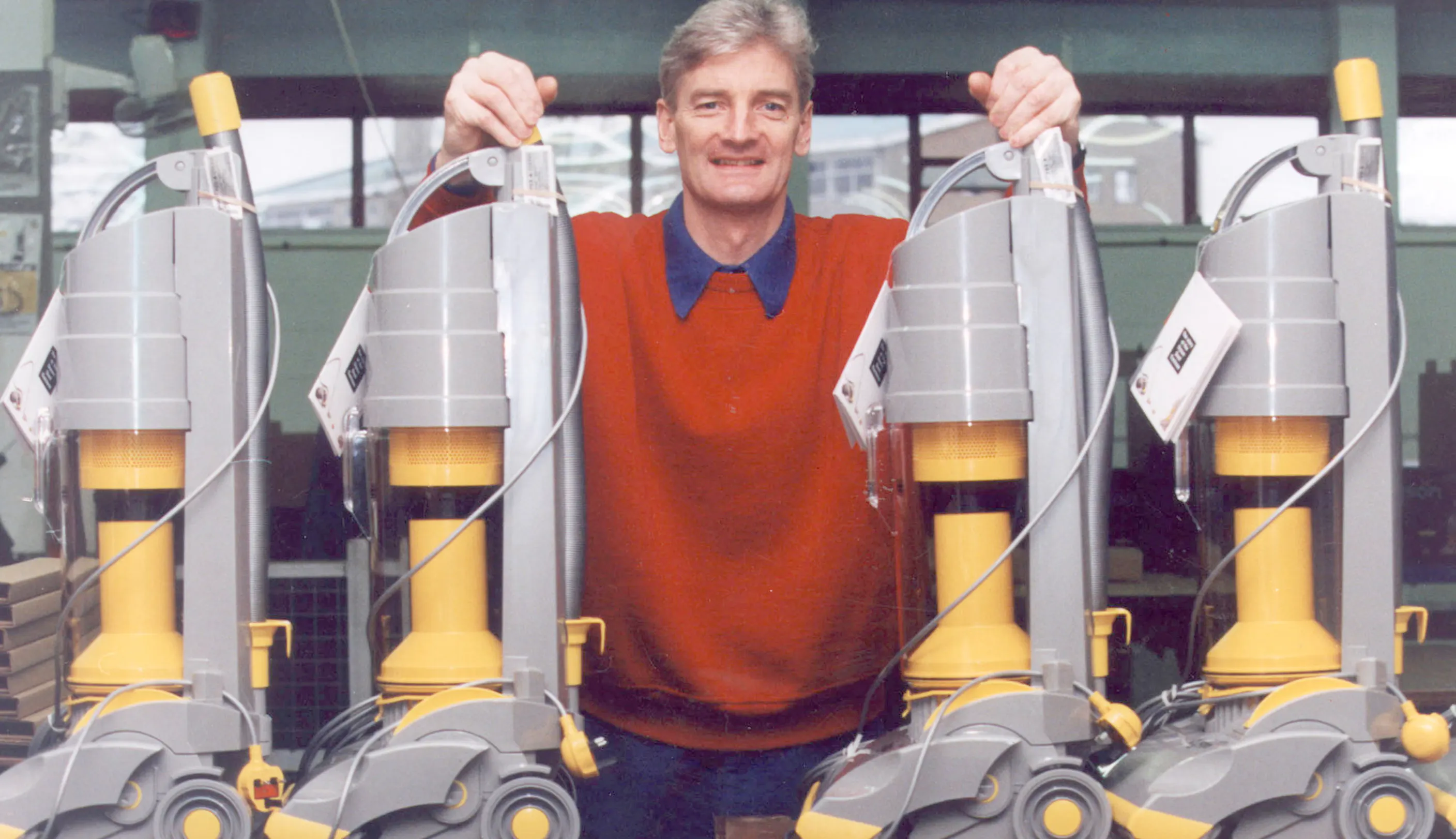
Before James Dyson, vacuum cleaners were designed to hide the dirt; Dyson’s perspective was that users wanted to see the evidence of the work, so they made the canister clear
Design is never a neutral act
The interfaces we build carry an inherent bias: they encourage certain behaviors and discourage others. Attempting to be neutral is, in itself, a perspective that often defaults to the status quo and the establishment. To design with perspective is to acknowledge the power you have over a user’s attention, and to use that power with intention to provoke change.
When AI generates the average, you handle the anomaly
Generative AI tools are trained to find the most likely and most common-sense solutions. If you ask a machine for a layout, it will give you the mathematical mean of every layout it has ever seen. This makes AI incredibly efficient at the baseline, but it also creates a sea of sameness. Your value as a designer then becomes to provide a perspective on why average isn't enough. If you’re bringing ideas that could be generated with a simple prompt, you are paving your path to oblivion. Perspective is the human intervention that chooses the meaningful over the probable.
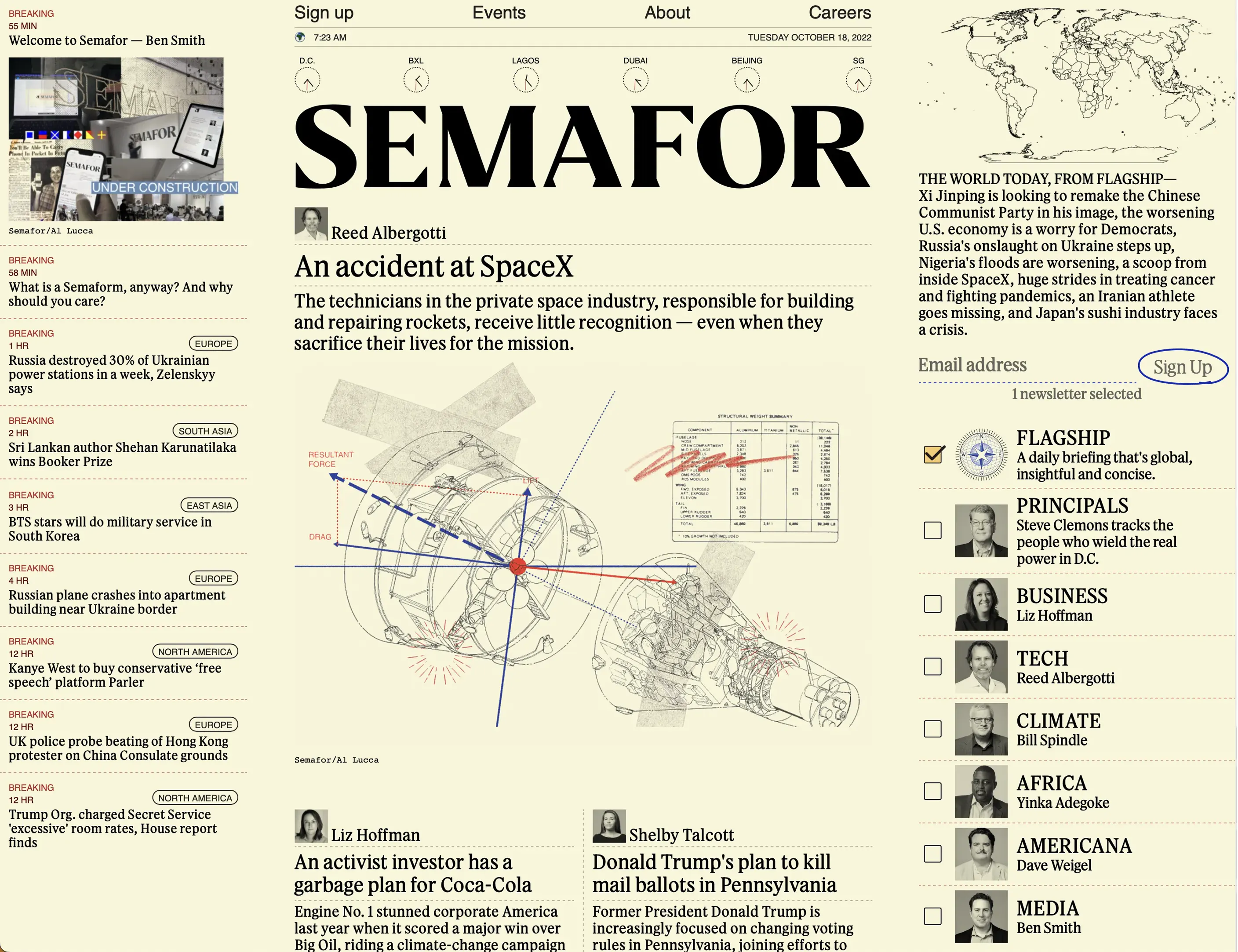
Semafor's website homepage, launched in 2022—a bold and unique art direction that differentiated it from more traditional news homepages
To have a perspective is, ultimately, to exist in the world
In an era where software can create itself in an instant, the courage to choose an intentional (and fallible) stance becomes our most vital sign as humans. What makes us unique is how we interpret the world around us, and how we use that input to generate action. To take a position is almost spiritual. Perspective is the unique friction we bring to the world to remind ourselves that we are here.